6 Best Air Purifiers for Bedrooms (October 2026)
The best air purifiers for bedrooms include the Levoit Vital 200S-P for large pet bedrooms, the Levoit Core 300-P for simple bedtime controls, and the Winix 5520 for automatic bedtime routines.
On this page (10 sections)
- How we chose the best air purifiers for bedrooms
- Compare bedroom cleaning rates and nighttime controls
- Which bedroom air purifier suits your routine?
- How much cleaning capacity does your bedroom need?
- What makes an air purifier comfortable to sleep beside?
- Will a bedroom purifier help with pets, dust and smells?
- Where should you place and set up a bedroom purifier?
- How do you keep bedroom filtration working well?
- Bedroom purifier mistakes to avoid
- Choose the best air purifier for your bedroom
The best air purifier for bedroom use is the Levoit Vital 200S-P for larger rooms and pet households. Choose the Levoit Core 300-P instead when your room is smaller and you want manual controls, Sleep Mode and a display you can turn off.
Start with room size, then decide which fan behavior and light controls you can live with overnight. A purifier needs a usable spot with open airflow, so check the space beside your furniture before choosing.
For more noise-focused options, compare our best quiet air purifiers. Our air purifier size and CADR guide explains how cleaning speed relates to room size.
Our picks at a glance
-
1

-
2

-
3
How we chose the best air purifiers for bedrooms
We prioritized room fit, nighttime controls and clear cleaning figures. Filtration, maintenance and physical size helped separate models that suit different bedrooms.
The highest score goes to the Vital for its verified airflow figures and pet-focused intake. The Core 300-P follows because its manual controls and display-off option meet common bedroom needs without a connected setup.
Minimum noise figures describe quiet settings, while room-cleaning figures may come from higher speeds. We considered those separately rather than assuming a purifier delivers its fastest cleaning at its lowest sound level.
For a purifier that will move between a bedroom and other spaces, our home air purifier guide compares needs across the house.
Compare bedroom cleaning rates and nighttime controls
Choose by repeated cleaning in your room, then compare how each purifier behaves after lights-out. A large one-hour coverage claim should not outweigh a better match for the space where you sleep.
| Product | Best for | Room-size basis | Quiet setting | Bedroom fit | Our score |
|---|---|---|---|---|---|
| Levoit Vital 200S-P | large pet bedrooms | Up to 1,875 sq ft; cleaning interval unspecified | No minimum noise figure supplied | 14.96 x 8.66 x 19.69 inches; 13.2 lb | 9.2 |
| Levoit Core 300-P | simple bedtime controls | 222 sq ft at 4.8 air changes per hour | 24 dB in Sleep Mode | 8.7 x 8.7 x 14.2 inches; 7.9 lb | 8.8 |
| Winix 5520 | automatic bedtime routines | AHAM verified at 392 sq ft | 23.5 dB on the slowest speed | 8.3 x 13.6 x 22.7 inches; 13.3 lb | 8.2 |
| Levoit Core 200S | small connected bedrooms | 140 sq ft at 4.8 air changes per hour | As low as 27 dB | 6.6 lb; compact design | 7.5 |
| Blueair Blue 511i Max | noise-sensitive sleepers | 237 sq ft in about 12.5 minutes | As low as 19 dB | 10.6 x 10.6 x 18.9 inches; 2.84 lb | 7.4 |
| Blueair Signature SP1i | style-conscious bedrooms | 248 sq ft in about 12.5 minutes | As low as 19 dB | 9.37 x 9.37 x 13.82 inches; 5.64 lb | 6.9 |
Manual operation suits sleepers who want a steady setting. Sensor control suits people who want the fan to respond to changing air quality, while light-based Sleep Mode suits a routine tied to a dark bedroom.
The table also helps you check physical fit. Leave space for airflow and filter access, not just enough room to fit the base.
Which bedroom air purifier suits your routine?
Choose the Vital for a larger pet bedroom, the Core 300-P for simple manual operation or the Winix for automatic bedtime changes. The smaller connected models suit readers whose priorities are remote control, quiet-setting sound or a compact visible body.
1. Levoit Vital 200S-P: best bedroom air purifier for larger pet rooms
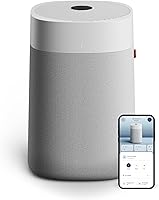
Levoit Vital 200S-P: Best for large pet bedrooms
- AHAM verified CADR: 250 CFM smoke, 254 CFM dust and 289 CFM pollen
- Traditional inlet plus an extra U-shaped inlet
- Replacement filter options for different needs
- Smart air purifier
The strongest choice here for larger bedrooms and pet households, with verified airflow figures and an extra inlet for airborne hair. Allow enough floor space around its wider body.
Pros
- Verified smoke, dust and pollen CADR figures
- Extra inlet designed for airborne pet hair
- Replacement filter choices for different needs
Cons
- No minimum noise figure for a direct bedtime comparison
- Wider body than the smaller Levoit picks
Choose the Vital 200S-P if your bedroom needs more airflow than the smaller Levoit picks provide. Its AHAM verified CADR figures are 250 CFM for smoke, 254 CFM for dust and 289 CFM for pollen.
The extra U-shaped inlet gives it a useful role where a cat or dog sleeps nearby. Levoit designed that inlet to help collect airborne pet hair without clogging, though hair already on bedding still needs regular cleaning.
Its body measures 14.96 by 8.66 by 19.69 inches and weighs 13.2 lb. A floor position with clear access makes more sense than squeezing it onto a crowded bedside table.
Skip it if a published minimum noise figure is your deciding factor. There is no quiet-setting number here for a direct comparison, so the Core 300-P or either Blueair provides a clearer starting point for sound-sensitive buyers.
Levoit offers replacement filters aimed at different needs, including a Pet Allergy Filter. Choose the filter for your main concern and confirm compatibility before replacing it.
Read our full Levoit Vital 200S review for a closer look at its room fit and features.
2. Levoit Core 300-P: simple controls for a smaller bedroom
Levoit Core 300-P: Best for simple bedtime controls
- 24 dB Sleep Mode
- AHAM verified CADR: 143 CFM smoke, 153 CFM dust and 167 CFM pollen
- Display-off control
- 2, 4, 6 or 8-hour timer
A practical choice for a smaller bedroom when you want to set the fan yourself and turn the display off. It keeps bedtime operation simple without app control or automatic speed changes.
Pros
- Sleep Mode and display-off control
- Four timer choices
- Verified cleaning figures
Cons
- No smart connectivity
- No Auto Mode; fan speed requires manual control
Choose the Core 300-P if you want to select a fan setting yourself and leave it there. It refreshes a 222 sq ft room 4.8 times per hour, a more useful bedroom reference than its much larger hourly coverage claim.
The bedtime controls are its main appeal. Sleep Mode has a stated noise level of 24 dB, the display lights turn off and the timer offers 2, 4, 6 or 8-hour options.
Its 8.7 by 8.7-inch footprint leaves more placement choices than the wider Vital. Still, keep the intake clear rather than treating its compact base as permission to wedge it between furniture.
Skip this model if you want app access or automatic fan changes. The Core 300-P has neither, so you must adjust it when your needs change.
For overnight use, decide whether you actually want a shutoff timer. Leaving it running maintains filtration through the night, while a timer ends cleaning at the selected point.
It is a 120V model intended only for US use. Our Levoit Core 300 review covers its controls and room-size trade-offs in more detail.
3. Winix 5520: automatic changes when the lights go out
Winix 5520: Best for automatic bedtime routines
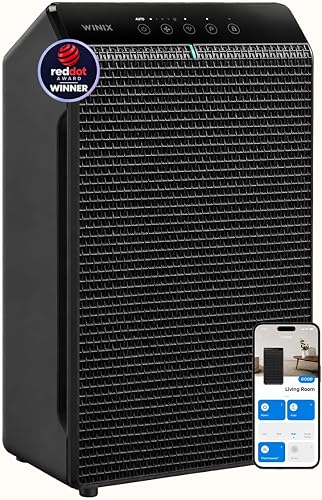
- Light-based Sleep Mode
- Air-quality sensor and Auto Mode
- Winix Smart App control
- Washable fine-mesh pre-filter and carbon filter
A good fit for sleepers who want the purifier to respond to room light and changing air quality. Its washable pre-filter also gives pet households a separate layer to clean.
Pros
- Enters Sleep Mode when the room darkens
- Sensor-controlled fan adjustment
- App control and air-quality indicator
- Washable fine-mesh pre-filter
Cons
- Light-based behavior may not suit daytime sleepers
- Tallest and heaviest pick here
Choose the Winix 5520 if you want the purifier to follow a lights-out routine. Sleep Mode starts when the room darkens, and the unit returns to Auto Mode when it detects light.
That behavior suits a bedroom used mainly for nighttime sleep. Daytime sleepers and people who keep the room dark while awake should consider whether light-triggered changes match their routine.
The air-quality sensor adjusts fan speed in Auto Mode, and the app provides remote control and monitoring. Its slowest speed has a stated noise level of 23.5 dB.
Winix gives an AHAM verified room size of 392 sq ft. That makes it worth considering for a bedroom beyond the smaller models' repeated-cleaning areas, provided you have room for its taller body.
The washable fine-mesh pre-filter catches larger airborne particles before the other filters. Winix also includes True HEPA filtration and a carbon filter that the brand says reduces household odors and VOCs.
Skip it if you want a small unit to move between bedside surfaces. At 22.7 inches tall and 13.3 lb, it suits a planned, stable position better than frequent moves.
4. Levoit Core 200S: connected controls for a small room
Levoit Core 200S: Best for small connected bedrooms
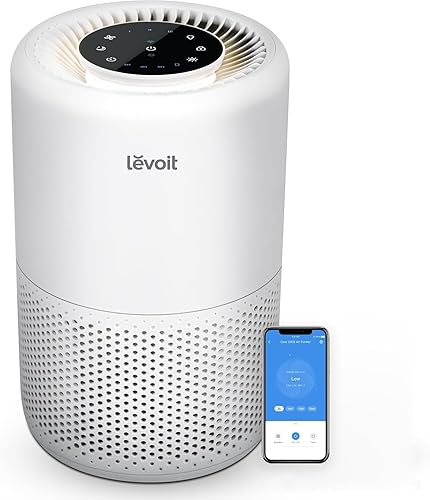
- Smart and voice control
- App-based filter-life monitoring
- Display-off button
- 360-degree air intake
Choose this for a small bedroom or dorm where remote controls are useful. Its room-size guidance is clear, and the display-off button helps keep bedtime light under your control.
Pros
- Smart and voice controls
- Display can be turned off
- App monitors filter life
Cons
- Smallest repeated-cleaning room figure here
- Higher minimum noise claim than the other picks with stated figures
Choose the Core 200S for a small bedroom or dorm where smart and voice control will be useful. Levoit gives a repeated-cleaning size of 140 sq ft at 4.8 air changes per hour.
That room-size limit should decide the purchase before the connected features do. Skip it for a substantially larger bedroom just because its lighter body is easier to place.
A display-off button lets you darken the controls at bedtime. The app monitors filter life, which helps if you would otherwise forget when the filter needs attention.
Its stated minimum noise is 27 dB, higher than the quiet-setting figures supplied for several other picks. Noise-sensitive sleepers should weigh that against the convenience of remote controls.
The filtration system includes a nylon pre-filter, main filter and activated carbon filter. Levoit says the main filter removes 99.97% of dust, pollen and dander measuring 0.1 to 0.3 microns.
Keep space around its 360-degree intake even in a cramped room. A clear position near a suitable outlet is more useful than a hidden spot behind a desk or laundry basket.
5. Blueair Blue 511i Max: low stated noise with automatic control
Blueair Blue 511i Max: Best for noise-sensitive sleepers

- Noise as low as 19 dB
- Air-quality sensor and automatic fan adjustment
- App controls, schedules and filter reminders
- 360-degree air intake
A small-bedroom option that pairs a low minimum noise claim with automatic fan control. Choose it when quiet-setting sound matters more than having the shortest purifier body.
Pros
- Low minimum noise claim
- App controls and filter reminders
- Automatic fan adjustment
Cons
- Minimum noise does not describe every fan speed
- Taller and wider than the Signature SP1i
Choose the Blue 511i Max if quiet-setting sound is a leading concern and you also want automatic fan adjustment. Blueair states a 19 dB minimum and cleaning coverage of 237 sq ft in about 12.5 minutes.
The air-quality sensor responds when pollution rises. App controls, schedules and filter reminders suit readers who want to manage the purifier without repeatedly reaching for it.
Blueair's HEPASilent system combines mechanical and electrostatic filtration. The brand says it captures 99.97% of airborne particles down to 0.1 microns, including dust, pollen, pet dander and smoke.
Its body measures 10.6 by 10.6 by 18.9 inches. Leave room around the 360-degree intake, especially if you plan to place it beside a dresser or bed frame.
Skip it if a short body is your main need. The Signature SP1i takes up less width and height while sharing the same minimum noise claim.
Automatic speed changes can also make sound less steady. If consistency matters more than automatic response, compare the available manual settings before settling on your overnight routine.
6. Blueair Signature SP1i: a compact purifier that stays in view
Blueair Signature SP1i: Best for style-conscious bedrooms

- Seven-stage HEPASilent filtration with OdorFence
- App controls, schedules and Auto Mode
- Five-color air-quality indicator
- Interchangeable pre-filters available in different colors
A compact, furniture-inspired choice for a bedroom where the purifier stays in view. Its color options and air-quality display provide a clear reason to choose it over the taller Blueair.
Pros
- Short body with a compact footprint
- Low minimum noise claim
- App control and Auto Mode
- Interchangeable pre-filter colors
Cons
- Air-quality display deserves attention if light bothers you
- Color choices do not replace the need to match room size
Choose the Signature SP1i when the purifier will sit in a visible bedroom spot and its shape matters to you. The 9.37 by 9.37 by 13.82-inch body is shorter and narrower than the Blue 511i Max.
Interchangeable pre-filters come in different colors, and the outlet includes a five-color air-quality indicator. Consider that visible display if even small light sources bother you at night.
Blueair gives a cleaning area of 248 sq ft in about 12.5 minutes. Its minimum noise claim matches the other Blueair here, so appearance and body size are clearer reasons to choose between them.
The app provides fan controls, schedules and remote management, while Auto Mode responds to changing indoor air conditions. Its seven-stage HEPASilent system includes OdorFence, which Blueair says helps break down odors, gases and VOCs.
Skip it if you mainly need the largest-room option or do not value its design features. Start with room fit and controls, then decide whether the shorter body and color choices improve where you can place it.
How much cleaning capacity does your bedroom need?
Match room area to repeated cleaning, and account for any connected space you leave open. Measure length times width in feet to find the floor area.
For example, a 10 by 14-foot bedroom is 140 sq ft. A 14 by 16-foot bedroom is 224 sq ft, so it already sits just beyond the Core 300-P's repeated-cleaning reference.
Those examples assume ordinary room proportions. A high ceiling adds air volume, and an open doorway lets air mix with the hall or adjoining room.
Compare cleaning intervals before maximum coverage
A one-hour coverage figure means less frequent cleaning than several air changes per hour in a smaller room. Keep the time interval attached to the area whenever you compare products.
The Vital's up-to-1,875 sq ft claim has no cleaning interval specified here. Its CADR figures provide the clearer basis for comparing airflow.
CADR describes the amount of cleaned air delivered, usually in cubic feet per minute. A higher figure gives more particle-cleaning capacity when other conditions are comparable.
Leave room for a quieter fan setting
Choose some capacity headroom if you expect to reduce fan speed overnight. Published room-cleaning figures should not be assumed to apply in Sleep Mode.
That is especially useful when your room sits near a model's stated limit. You want a setting you can keep running, rather than enough capacity only at a sound level you dislike.
Our guide to calculating square footage for an air purifier walks through room measurements and sizing choices.
What makes an air purifier comfortable to sleep beside?
The best bedtime fit combines tolerable sound, suitable airflow and manageable lights. The lowest decibel number helps narrow the choice, but your preferred operating mode matters just as much.
A steady fan sound may be easier to sleep with than repeated changes in speed. Auto Mode is useful during changing conditions, while manual operation gives you a more predictable setting.
Try your chosen setting during an evening when you can listen from the pillow. Move the purifier if the airflow points toward your face or its position makes the sound distracting.
Display controls deserve a separate check. The smaller Levoit models let you turn the display off, while the Winix uses room light to trigger its sleep behavior.
Avoid choosing entirely by a small difference between minimum noise claims. Those numbers may reflect different conditions, and they do not show how each unit sounds at the airflow your room needs.
If sound is the deciding issue, use our quiet air purifier comparison to narrow your options around bedtime use.
Will a bedroom purifier help with pets, dust and smells?
A purifier can reduce airborne particles, while odor control depends on the filter design and the source of the smell. It does not remove hair from blankets, dust from shelves or dirt from a pet bed.
For a pet bedroom, combine filtration with regular bedding care and surface cleaning. Keeping the source cleaner reduces how much material gets stirred back into the air.
An accessible pre-filter is useful where larger particles collect quickly. Check it more often during shedding periods, and clean it only by the method allowed for that model.
Treat carbon and other odor features as part of a wider plan. Remove dirty laundry, clean pet bedding and address damp materials rather than relying on the purifier to cover a continuing smell.
Smoke also includes gases as well as particles. Particle filtration does not make a smoky room safe or replace removing the source.
For more help with pet smells, read whether air purifiers help with pet odor. If your main concern is pollen or dander, remember that reducing airborne material does not guarantee relief from allergy symptoms.
Where should you place and set up a bedroom purifier?
Use a stable spot with open intake and outlet airflow, following the manual's clearance instructions. Keep it clear of curtains, bedding, furniture and your nighttime walking path.
A position that stays usable every day is better than one that requires moving the purifier whenever you open a drawer. Leave enough access to remove the filter without shifting heavy furniture.
Complete the first setup before bedtime
Check the manual for filter packaging that must be removed before operation. A pre-installed filter may still have protective wrapping, so do not assume the unit is ready as soon as it is plugged in.
Fit the filter in the correct direction and secure the cover. Route the cord where feet, pets and moving bed frames cannot catch it.
For connected models, finish the app setup while you have time to learn the controls. Confirm how to choose a fan setting and handle the lights before your first overnight use.
Start with a useful evening routine
Run a stronger setting before bed if the extra sound is acceptable while you are awake. Then choose an overnight setting that keeps air moving without disturbing you.
Keep windows and doors consistent with the room area you used for sizing. Fresh-air needs still matter, but a purifier cannot control a constant stream of outdoor pollution entering through an open window.
Our full air purifier placement guide explains how airflow and room layout affect the choice of spot.
How do you keep bedroom filtration working well?
Keep airflow paths clean and replace filters according to condition and instructions. A reminder is useful, but it should not replace checking for buildup.
Look at the intake and any accessible pre-filter regularly. Pet hair, lint and dust can collect faster in a bedroom with several occupants, open windows or heavy shedding.
Separate washable parts from replacement filters
Only wash parts identified as washable. The Winix fine-mesh pre-filter is one example, but that permission does not extend to its other filter stages.
Let washable parts dry fully before putting them back. Do not rinse a disposable particle or carbon filter unless its care instructions specifically allow it.
Switch the purifier off and unplug it before maintenance as directed by the manual. Keep water away from the motor, controls and electrical connections.
Plan for replacement filters before buying
Check that you can obtain the correct replacement filter for the exact model. Similar product names do not guarantee that the filters fit.
Levoit recommends replacing the Core 300-P filter every 6 to 8 months. Actual care needs depend on use and conditions, so follow the model's instructions and inspect the filter rather than extending the interval by habit.
Our guide to how often to change an air purifier filter explains how room conditions affect replacement timing.
Bedroom purifier mistakes to avoid
Avoid undersizing, blocked airflow and the wrong operating routine. These choices can waste the benefits of an otherwise suitable purifier.
- Buying by the biggest area number: compare the cleaning interval, not just square footage.
- Using the quietest setting without considering airflow: give the room enough cleaning capacity at a sound level you can tolerate.
- Hiding the unit behind furniture: the intake and outlet need clear space to move air.
- Stopping it too early: a timer is useful only if you want filtration to end at that point.
- Expecting a sensor to measure everything: an air-quality display does not identify every pollutant or prove that a room is free of allergens.
- Ignoring the source: filtration supports cleaning and source control; it does not replace either.
If your bedroom still feels dusty, check bedding, surfaces and blocked airflow before assuming you need another purifier. Settled dust needs physical removal, even when airborne filtration is working.
Choose the best air purifier for your bedroom
Choose the Core 300-P for a smaller bedroom with a simple manual routine. Move to the Vital 200S-P when a larger room or pet needs make its stronger verified airflow figures more useful.
Choose the Winix 5520 if you want light-based Sleep Mode and sensor-controlled fan changes. Make sure that automatic response to darkness fits when you actually sleep.
The Core 200S suits a small room where connected controls matter. Choose the Blue 511i Max for its low minimum noise claim, or the Signature SP1i when a shorter visible body and color choices solve a placement need.
Before buying the best air purifier for your bedroom, settle 3 details: the area you need to clean, the setting you will leave running and the clear space available. Use our air purifier size and CADR guide to resolve the sizing question first.
Our top 3 picks at a glance
-
1
-
2
-
3
Frequently asked questions
What is the best air purifier for a bedroom?
The Levoit Vital 200S-P is our top choice for larger bedrooms and pet households because of its verified CADR figures and extra hair-focused inlet. For a smaller bedroom, choose the Core 300-P if manual controls, Sleep Mode and the option to turn off display lights suit your routine.
How quiet should a bedroom air purifier be?
Choose a purifier whose overnight setting you can comfortably leave running, rather than buying by the lowest noise number alone. Minimum figures describe quiet operation at a particular setting; also consider changing fan speeds, indicator lights and whether the purifier can move enough air at your preferred nighttime speed.
What size air purifier do I need for a bedroom?
Match your bedroom's floor area to a repeated-cleaning room figure, not just the largest hourly coverage claim. Measure length times width, then consider ceiling height and any open adjoining space; leave some airflow headroom if you expect to use a quieter setting rather than the highest fan speed.
Should I run an air purifier while sleeping?
Yes, you can run a bedroom air purifier overnight according to its manual, using a setting that balances airflow and sound. Start it earlier if you want a stronger cleaning period before bed; keep the intake and outlet clear, and avoid using a timer that stops it before you want cleaning to end.
Can I wash an air purifier filter?
Only wash a filter that the model's care instructions identify as washable; the Winix 5520 has a washable fine-mesh pre-filter, but that does not make its other filters washable. Keep disposable particle and carbon filters dry unless their instructions specifically allow water, and let washable parts dry fully before refitting.