6 Best Quiet Air Purifiers (October 2026)
The best quiet air purifiers for bedrooms include the Levoit Vital 200S-P for large bedrooms with pets, the Levoit Core 300-P for simple bedtime controls, and the Winix 5520 for automatic nighttime changes.
On this page (8 sections)
- How we chose these quiet air purifiers
- Quiet air purifier comparison
- The best quiet air purifiers for different bedrooms
- How to choose the best quiet air purifier for your room
- How to set up a quiet purifier for overnight use
- How to keep airflow steady without adding noise
- Common mistakes when buying for quiet operation
- Which best quiet air purifier fits your routine?
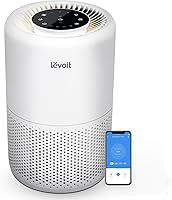
The Levoit Core 300-P is the best quiet air purifier for a bedroom where simple controls, a dark display and a stated Sleep Mode noise level matter most. The higher-scoring Vital 200S-P is our capacity-first choice for larger pet bedrooms, while both Blueair models offer lower stated noise minimums.
Buy for the room and the fan speed you'll use, rather than the smallest decibel number. A purifier that needs its highest speed to serve your bedroom may be a poor match for overnight use.
Start with our home air purifier guide for broader room and filter choices. Our bedroom air purifier roundup focuses on the other features that matter beside a bed.
Our picks at a glance
-
1

-
2

-
3
How we chose these quiet air purifiers
We compared room-cleaning capacity, stated noise, nighttime controls and filter care. The ranking reflects the whole package, while the recommendations below identify the better fit for each buyer.
The Vital leads on capacity for larger pet rooms, but we cannot rank its sound against the others without a minimum noise figure. Readers who need a stated nighttime sound level should start with the Core 300-P or the Blueair options.
We kept cleaning times attached to room claims wherever available. An area refreshed once per hour is a different use case from a bedroom receiving several air changes per hour.
The EPA guide to air cleaners explains that higher fan speeds and longer run times increase filtration. This makes enough airflow at a tolerable setting more useful than a low minimum sound figure alone.
Noise figures also need context: the brands do not provide sound measurements at a shared cleaning output here. Treat small differences as shortlist clues rather than proof that one machine will sound better in your bedroom.
Quiet air purifier comparison
The Blueair models have the lowest stated minimum noise, while the larger Levoit and Winix options address rooms with greater cleaning needs. Compare the coverage conditions alongside the nighttime controls.
| Product | Best for | Smoke CADR | Coverage claim | Bedroom feature | Our score |
|---|---|---|---|---|---|
| Levoit Vital 200S-P | large bedrooms with pets | 250 CFM | Up to 1,875 sq ft | Pet-focused intake and large-room capacity | 9.2 |
| Levoit Core 300-P | simple bedtime controls | 222 sq ft at 4.8 air changes per hour | Sleep Mode and display-off control | 8.8 | |
| Winix 5520 | automatic nighttime changes | AHAM verified for 392 sq ft | Light-activated Sleep Mode | 8.2 | |
| Levoit Core 200S | small rooms with voice control | 140 sq ft at 4.8 air changes per hour | Smart control and display-off button | 7.5 | |
| Blueair Blue 511i Max | light sleepers using apps | 237 sq ft in about 12.5 minutes | Automatic fan adjustment and app scheduling | 7.4 | |
| Blueair Signature SP1i | bedrooms with visible purifiers | 248 sq ft in 12.5 minutes | Auto Mode and app scheduling | 6.9 |
Use the AHAM certified room air cleaner directory to check verified models and room recommendations. Keep the exact model name in view, since similar names can refer to different controls or cleaning capacity.
The best quiet air purifiers for different bedrooms
The Core 300-P is the simplest starting point for a typical bedroom routine. Move toward the Vital or Winix for greater room demands, or toward Blueair when low stated noise and app controls lead your decision.
Levoit Vital 200S-P: Best for large bedrooms with pets
- AHAM-verified smoke CADR of 250 CFM
- U-shaped and traditional air inlets
- Coverage claim up to 1,875 sq ft
- Filtration for dust, pollen, dander, hair and smoke
Choose it for a larger bedroom shared with pets, where airflow and hair capture lead the decision. Its minimum noise is unspecified, so it is a capacity-first choice.
Pros
- AHAM-verified cleaning capacity
- Extra U-shaped inlet for airborne pet hair
- Replacement filter options for pets, smoke and VOCs
Cons
- Minimum noise is unspecified
- Larger body needs a planned floor space
Choose the Levoit Vital 200S-P for a larger bedroom shared with pets, especially when airborne hair and dander drive the purchase. Its traditional inlet and extra U-shaped inlet give pet hair another intake path that Levoit designed to limit clogs.
Its AHAM-verified CADR figures are 250 CFM for smoke, 254 CFM for dust and 289 CFM for pollen. The separate coverage claim reaches 1,875 sq ft, but no cleaning interval accompanies that figure here.
That makes CADR the more useful starting point for sizing. For a connected bedroom and dressing area, count the space you expect the purifier to serve instead of measuring only the area around the bed.
Levoit offers replacement filters aimed at pet allergens, smoke or VOCs. Choose by the main pollutant you need to address, while remembering that odor control also requires cleaning the source.
At 14.96 by 8.66 by 19.69 in, it needs a planned floor position. Leave access for care so the purifier does not become awkward to maintain.
Skip it if a known nighttime sound level is essential. Its capacity earns its place here, but its unspecified minimum noise makes it a less certain choice for a sound-sensitive sleeper.
Our Levoit Vital 200S review covers its size and buying trade-offs in more detail.
Levoit Core 300-P: Best for simple bedtime controls
- 24 dB Sleep Mode
- AHAM-verified smoke CADR of 143 CFM
- Display lights can be turned off
- Timers for 2, 4, 6 or 8 hours
A strong fit for a bedroom where dark controls and a simple nighttime routine matter. Fan speeds are manual, with no app or Auto Mode.
Pros
- Stated Sleep Mode noise figure
- Display lights turn off
- Four timer choices
- AHAM-verified CADR figures
Cons
- No smart connectivity
- Fan speed changes require manual input
Choose the Levoit Core 300-P if you want to set a fan speed, darken the panel and leave your phone elsewhere. Its 24 dB Sleep Mode and display-off control address two common bedroom distractions directly.
The timer offers 2, 4, 6 or 8 hours, and a check-filter indicator helps prompt maintenance. There is no Auto Mode or smart connection, so fan changes stay under your manual control.
That simplicity suits someone who dislikes unexpected changes in fan sound. It also means you must raise the speed yourself when the room needs stronger airflow.
Its AHAM-verified smoke CADR is 143 CFM, with coverage of 222 sq ft at 4.8 air changes per hour. Use that repeated-cleaning figure for a bedroom decision rather than the much larger once-per-hour area.
The body is 8.7 in across and 14.2 in tall, which helps when floor space beside bedroom furniture is limited. Leave the intake open rather than wedging it between a dresser and a wall.
Skip it if you want remote adjustments or automatic responses to changing air conditions. Also avoid sizing it for an open suite using its largest coverage number.
Read our Levoit Core 300 review if you are deciding between simple operation and more automation.
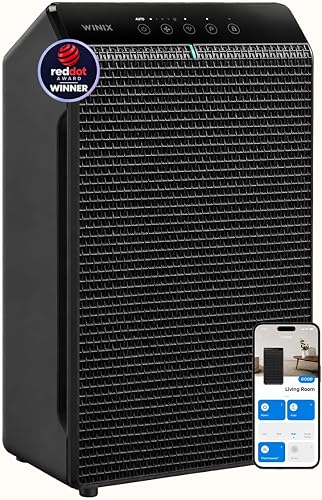
Winix 5520: Best for automatic nighttime changes
- 23.5 dB on its slowest speed
- Sleep Mode responds to room light
- Air-quality sensor and Auto Mode
- True HEPA and carbon filters
Choose it if you want Sleep Mode to follow the room's light level. Sensors, Auto Mode and app control reduce the need for manual adjustments.
Pros
- Automatic Sleep Mode in darkness
- Air-quality sensor and Auto Mode
- Washable fine-mesh pre-filter
- App control and monitoring
Cons
- Automatic fan changes may interrupt a steady sound
- Tall body needs a clear floor position
Choose the Winix 5520 if your routine follows the room's light level. It enters Sleep Mode when the room darkens and returns to Auto Mode when light comes back.
Its slowest speed has a stated noise level of 23.5 dB. In Auto Mode, an air-quality sensor adjusts the fan, while an LED indicator shows current conditions.
That arrangement suits someone who wants less manual input before bed. If you work or read in a darkened bedroom, consider whether light-triggered Sleep Mode fits the airflow you want during those hours.
The Winix is AHAM verified for 392 sq ft. Its separate 1,882 sq ft claim describes cleaning over an hour, so it should not guide a bedroom decision that calls for frequent air changes.
A washable fine-mesh pre-filter catches larger particles before the True HEPA and carbon filters. Winix says its carbon filter reduces household odors and VOCs, but source control remains necessary for persistent smells.
App control and monitoring add convenience when the unit sits across the room. The 22.7 in height also calls for a clear floor spot rather than a low, enclosed shelf.
Skip it if you prefer a steady fan sound without automatic changes. Its response to darkness is useful only when that behavior matches how you use the room.
Levoit Core 200S: Best for small rooms with voice control
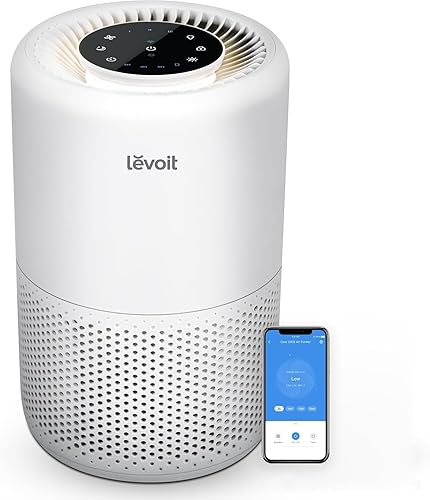
- Noise as low as 27 dB
- Smart and voice control
- Display-off button
- Refreshes 140 sq ft 4.8 times per hour
A small-bedroom option for readers who want smart and voice controls. Its display-off button also suits rooms where panel light is a distraction.
Pros
- Smart and voice control
- Display lights can be turned off
- 360-degree air intake
- In-app filter-life monitoring
Cons
- Higher stated minimum noise than the other sound-rated picks
- Limited repeated-cleaning coverage for larger rooms
Choose the Levoit Core 200S for a small bedroom or dorm where smart and voice controls are more useful than greater room capacity. A display-off button lets you remove panel light at bedtime.
Levoit states a minimum noise level of 27 dB and coverage of 140 sq ft at 4.8 air changes per hour. That makes it a focused small-room option rather than a choice for a bedroom opening into a large sitting area.
Its 360-degree intake needs space around the body. A small purifier still loses useful airflow when bags, laundry or furniture block the inlet.
The filter system includes a nylon pre-filter, an activated-carbon filter and a main filter for airborne particles such as dust, pollen and dander. In-app filter-life monitoring helps you keep replacement checks in your routine.
Smart access is useful when controls would otherwise be hard to reach. It is also a reason to choose this model over the manual Core 300-P if you regularly adjust settings from bed.
Skip it for a larger room or if the lowest stated noise is your main goal. Choose it because the room is small and you will use its controls, not simply because it carries a compact-room label.
Blueair Blue 511i Max: Best for light sleepers using apps

- Noise as low as 19 dB
- Cleans 237 sq ft in about 12.5 minutes
- Air-quality sensor and automatic fan adjustment
- App control and filter reminders
A useful shortlist choice when low stated noise and app scheduling lead your priorities. Its sensor can adjust the fan as indoor pollution changes.
Pros
- Joint-lowest stated minimum noise here
- Automatic fan adjustment
- App schedules and filter reminders
- 360-degree air intake
Cons
- Minimum noise does not describe every fan speed
- Round intake needs open space around the body
Choose the Blueair Blue 511i Max when a low stated noise minimum and app scheduling lead your shortlist. Blueair gives it a minimum of 19 dB, tied with the Signature SP1i.
Its room claim of 237 sq ft in about 12.5 minutes is the useful bedroom reference. The separate 1,138 sq ft figure covers an hour and serves a different cleaning pace.
HEPASilent combines mechanical and electrostatic filtration. Blueair says the system captures airborne particles including dust, pollen, pet dander and smoke.
A sensor automatically adjusts the fan when pollution rises. Through the app, you can monitor air quality, change settings, schedule operation and receive filter reminders.
Scheduling can support stronger airflow before bedtime, followed by the setting you prefer overnight. Automatic adjustments are useful during changing conditions, though a speed change can draw attention in a quiet room.
The cylindrical body measures 10.6 in across and 18.9 in tall. Check that your chosen floor spot leaves its surrounding intake open.
Skip it if you need to serve a much larger connected area. Also confirm the light and control behavior you need rather than assuming the lowest sound figure covers every part of the nighttime experience.
Blueair Signature SP1i: Best for bedrooms with visible purifiers

- Noise as low as 19 dB
- Cleans 248 sq ft in 12.5 minutes
- Seven-stage HEPASilent filtration
- Five-color air-quality indicator
A small-room option with a furniture-inspired body and interchangeable colored pre-filters. Choose it when the purifier will stay in view and appearance affects where you can place it.
Pros
- Joint-lowest stated minimum noise here
- Auto Mode
- App schedules and air-quality monitoring
- Interchangeable colored pre-filters
Cons
- Check indicator-light behavior if darkness matters
- Large one-hour coverage figure is unsuitable for frequent-cleaning comparisons
Choose the Blueair Signature SP1i if the purifier will stay in view and appearance affects where you are willing to put it. Its furniture-inspired body and interchangeable colored pre-filters give it a clear role in a furnished bedroom.
Blueair states a minimum of 19 dB and cleaning coverage of 248 sq ft in 12.5 minutes. Its larger one-hour claim should not replace that smaller area when comparing frequent room cleaning.
Auto Mode responds to changing indoor conditions. The app lets you control fan speed, set schedules and monitor air quality without reaching the unit.
A five-color air-quality indicator sits in the outlet, with an animation during active cleaning. If you need a completely dark room, confirm how that indicator behaves at night before choosing this model.
Blueair says its seven-stage HEPASilent filtration captures fine airborne particles, while OdorFence technology helps address odors, gases and VOCs. Keep ventilation and source removal in the plan for odor problems.
The body measures 9.37 by 9.37 by 13.82 in, giving you a shorter option than the 511i Max. Any raised placement still needs a stable surface and clear airflow.
Skip it if appearance will not affect your use. Choose between the two Blueair models by room fit, controls and placement rather than their shared minimum noise figure.
How to choose the best quiet air purifier for your room
Choose room capacity first, usable sound second and convenience third. This order reduces the chance of buying a quiet machine that you must run harder than expected.
Size the room before choosing a quiet air purifier
Measure length and width, then multiply them for floor area. An open doorway into a dressing room or sitting area can add to the space you expect one purifier to serve.
Ceiling height matters because the fan moves air through a volume, not just across a floor. An unusually tall room needs more consideration than a standard bedroom with the same square footage.
Use our guide to calculating room size for an air purifier if the space has an irregular shape. Measure before ordering so the intended location and room demand are both clear.
Compare the same cleaning pace
Compare coverage figures with matching time periods or air-change rates. A large area cleaned once per hour should not be placed beside a much smaller area cleaned several times per hour as if the claims mean the same thing.
CADR measures clean-air delivery and helps compare particle-cleaning capacity. Our air purifier CADR guide explains how to read it alongside room size.
Extra capacity can give you more flexibility in fan choice. It does not guarantee quiet operation, since the sound at each speed still depends on the model.
Decide whether steady sound or automatic control matters more
Choose manual operation if a changing fan sound bothers you more than a constant hum. Choose automatic control if responding to changing air conditions matters more than keeping the sound steady.
The same person may prefer Auto Mode during the day and a fixed setting at night. Check how the model's controls support that routine, especially if Sleep Mode changes more than the display.
A low sound minimum is only one part of comfort. Tonal hum, airflow noise and the distance from your pillow can all affect how noticeable a purifier feels.
Match filtration to the actual problem
Choose particle filtration for airborne dust, pollen and dander. For odors, consider the carbon filter alongside the source of the smell rather than assuming particle capture will solve both problems.
A purifier does not remove settled dust from shelves or pet hair from bedding. Cleaning those surfaces reduces the material that can become airborne again.
For a clearer view of those limits, read what air purifiers can and cannot do. This helps keep your buying decision tied to a problem the machine can address.
Check lights before adding more smart features
Prioritize display control if even a small panel light distracts you. App access is useful, but it does not replace the need for suitable light behavior on the unit itself.
Also consider who will use the controls. A shared bedroom may work better with obvious buttons than with settings managed through one person's phone.
How to set up a quiet purifier for overnight use
Set it up with clear airflow and a realistic nighttime routine. Good placement helps you avoid choosing a higher fan speed just to compensate for a blocked inlet.
Unpack the filter and check the manual
Follow the setup instructions, including removing any protective filter packaging before operation. Check that the filter and access panel are seated correctly.
Place the purifier on a level, stable surface approved for that model. Route the cord away from walkways, loose bedding and pets that may chew it.
Choose an open spot away from your pillow
Keep curtains, laundry and furniture clear of the intake and outlet. Follow the model's clearance instructions instead of applying one distance to every purifier.
You do not need to direct the outlet at your face. A position farther from the pillow may reduce noticeable airflow and sound while still keeping the unit in the bedroom.
Our guide to where to place an air purifier covers common room layouts. Choose a workable spot before letting appearance push the machine into a corner.
Build a day-and-night fan routine
Use stronger airflow before bed when the room needs it, then select a comfortable overnight setting. Earlier operation helps prepare the room, but it does not replace filtration while new particles continue to enter.
Try the intended nighttime setting during your normal bedtime routine while return options remain available. Listen with the room quiet and check panel lights from the bed, not just while standing beside the purifier.
A purifier placed on a loose or uneven surface can add vibration noise. Correct the surface or placement before assuming the fan itself is the only cause.
How to keep airflow steady without adding noise
Keep the intake clear and follow the filter-care instructions. Dust buildup and neglected filters can restrict airflow, while incorrect cleaning can damage filter material.
Check the pre-filter and intake regularly, especially in rooms with pets or heavy dust. Clean only the parts and surfaces the manual permits, and unplug the unit before maintenance as directed.
A washable pre-filter does not mean every filter in the machine is washable. Let washable parts dry fully before reinstalling them according to the instructions.
Plan for replacement filters when comparing models. Use the correct filter for the exact model, and do not assume a different filter will preserve the same airflow or cleaning figures.
Levoit recommends replacing the Core 300-P filter every 6 to 8 months. Actual conditions still matter, so use reminders as prompts to inspect and follow the manual.
Our guide to how often to change an air purifier filter explains how room conditions affect care. Record the installation date so filter age does not become a guess.
Common mistakes when buying for quiet operation
Avoid choosing by the lowest decibel figure or the largest room claim alone. Both can describe conditions different from how you plan to use the purifier.
Expecting the lowest setting to deliver maximum airflow
A quiet low-speed mode usually moves less air than a higher setting. Size the purifier around the room's cleaning needs and leave room in your decision for a usable everyday speed.
Assuming Auto Mode always means steady sound
Sensors can raise and lower the fan as conditions change. That is useful for air cleaning, but a fixed setting may suit someone who wakes when background sound changes.
Switching it off as soon as the room seems fresh
A clean smell does not measure airborne particle levels. If overnight filtration is your goal, choose a tolerable setting you can keep running rather than relying on a short timer.
Hiding the purifier to improve the room's appearance
A cabinet, tight furniture gap or curtain can block airflow. Pick a body style you can leave in an open position instead of buying one you will immediately conceal.
Which best quiet air purifier fits your routine?
Choose the Core 300-P for simple bedroom controls and a dark display. Choose the Vital 200S-P for a larger pet bedroom when cleaning capacity leads and you can resolve its sound suitability before committing.
Pick the Winix 5520 if you want nighttime operation to follow room light. Choose the Core 200S for a genuinely small room where you will use smart and voice controls.
Shortlist the Blue 511i Max for low stated noise with app scheduling. Choose the Signature SP1i when its shorter body and appearance help you keep the purifier in a useful, open position.
The best quiet air purifier is one you can run at a useful speed throughout the hours you need it. If two options remain close, use our bedroom air purifier guide to settle the choice by room fit and nighttime controls.
Our top 3 picks at a glance
-
1
-
2
-
3
Frequently asked questions
What is a quiet noise level for a bedroom air purifier?
The models here with stated minimum noise figures range from 19 to 27 dB. Those figures describe low-speed operation, not every setting.
Choose a purifier with enough room capacity, then consider sound at the speed you will actually use.
Fan tone, distance and background noise also affect what you hear.
What is the best quiet air purifier for a bedroom?
The Levoit Core 300-P is our clearest recommendation for a bedroom with simple controls, a stated Sleep Mode noise level and display-off operation. Choose a Blueair model if the lowest stated minimum leads your decision.
For a larger pet bedroom, prioritize the Vital 200S-P's capacity, while checking its sound before committing.
Should an air purifier run all night?
Continuous overnight operation is useful because airborne particles can keep entering the room while you sleep. Follow the model's instructions, keep its airflow clear and choose a speed you can comfortably leave running.
A timer that switches the unit off also stops filtration, so use one only when that suits your routine.
Where should an air purifier sit in a bedroom?
Place it in an open spot with the intake and outlet clear of curtains, bedding and furniture. Follow the manual's clearance instructions rather than using a fixed distance for every model.
Keep it off unstable surfaces, leave controls accessible and route the cord away from walkways and pets.
Does Sleep Mode clean the air as well as the highest fan speed?
Sleep Mode generally lowers airflow to reduce sound, so it should not be assumed to match the highest fan speed's cleaning rate. The EPA advises that higher speeds and longer run times increase filtration.
Use stronger airflow before bed when useful, then choose an overnight setting that balances room needs and sound.