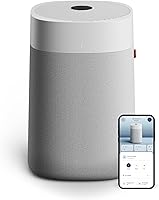
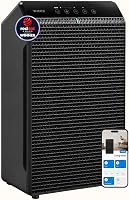
Do Air Purifiers Work? What They Can and Cannot Do
Yes, air purifiers work by filtering airborne particles such as dust, pollen, dander and smoke from room air. Choose enough airflow for your room, run the unit regularly and address pollution sources too.
On this page (8 sections)
- How do air purifiers work?
- What can an air purifier remove?
- What can an air purifier not remove?
- Do air purifiers work for allergies?
- Do air purifiers work on odors and gases?
- How do you choose the right size?
- How should you set up and care for an air purifier?
- The decision: do air purifiers work for your home?
Yes, air purifiers work on airborne particles such as dust, pollen, pet dander and smoke that pass through their filters. They are most useful when you match airflow to a defined room and keep the fan running regularly.
They cannot clean surfaces, fix dampness or stop pollution at its source. The EPA guide to air cleaners explains why filtration belongs alongside source control and ventilation.
Start with the problem you want to reduce, then choose the room where cleaner air would help most. That gives you a better buying plan than choosing the largest coverage claim.
How do air purifiers work?
Air purifiers use a fan to draw room air through filters and return cleaner air to the space. Repeated circulation lowers the amount of particles floating in the air.
Particle filters capture material carried into the intake. Activated carbon serves a different purpose: it can adsorb some gases and odor compounds.
A filter’s capture percentage describes air passing through that filter, not every particle throughout your home. Room airflow and continuing pollution determine how much cleaning reaches the space around you.
When do air purifiers work best?
Air purifiers work best with enough clean airflow, clear intake and outlet space, and long run times. A machine you can tolerate on a useful fan setting is a better match than one you keep switching off.
Choose one room first, such as a bedroom or the living room where pets spend time. A single portable purifier cannot reliably serve several rooms through narrow doorways.
What can an air purifier remove?
A suitable purifier can reduce airborne dust, pollen, pet dander, smoke particles and mold particles. It catches these materials while they are suspended, before they settle or move elsewhere.
For pet households choosing a living-room unit, the Levoit Vital 200S-P offers more airflow than the smaller Core 300-P below. Its smoke, dust and pollen CADRs are 250, 254 and 289 CFM, respectively.
Choose the Vital 200S-P if airborne pet hair and particles are priorities and you have floor space for its roughly 15 by 9-inch footprint. The extra intake gives it a practical role near the area where pets spend time, with clearance around the unit.
Skip it if your main goal is removing fur from rugs or furniture. Those jobs still call for cleaning, and a larger purifier will not replace that work.
For help judging filter terminology, read HEPA vs True HEPA. Filter labels matter, but they need to be paired with enough airflow.
What can an air purifier not remove?
An air purifier cannot collect settled dirt, correct moisture problems or make an active pollution source harmless. It also does not supply fresh outdoor air or solve a stuffy room caused by poor ventilation.
Vacuum floors and upholstery, and damp-dust hard surfaces. These steps remove material that a purifier cannot reach and reduce what gets stirred back into the air.
For mold, address leaks, condensation and affected materials first. Our air purifier and mold guide explains why catching airborne particles does not resolve growth on a wall.
Smoke contains both particles and gases, so particle filtration handles only part of the problem. Read what an air purifier can and cannot do for smoke before relying on one for smoke exposure.
Avoid devices designed to produce ozone in occupied rooms. The EPA guidance on ozone generators explains the health concerns and limits of that approach.
Do air purifiers work for allergies?
Air purifiers can reduce some airborne allergens, but symptom relief varies. Bedding, rugs and upholstery can hold allergens that never reach a purifier’s filter.
A bedroom is a sensible starting point because you spend long stretches there. Keep up with bedding care and cleaning, and seek medical advice for ongoing or severe symptoms.
The Levoit Core 300-P suits a smaller bedroom where you want simple controls. It provides 4.8 air changes per hour in 222 square feet, compared with only 1 per hour at its much larger advertised coverage area.
Choose it if you are happy setting the fan yourself and want a dark display at night. It has no Auto Mode or smart connectivity, and its quietest setting should not be assumed to deliver maximum airflow.
Skip it for a large connected living area or if automatic speed changes are essential. Our guide to air purifiers for allergies explains how filtration fits into a wider allergen-control routine.
Do air purifiers work on odors and gases?
An air purifier needs suitable gas-filtering material, usually activated carbon, to help with smells. A particle filter alone will not handle gases well, and particle CADR does not measure odor removal.
Start by cleaning the litter box, removing spoiled food or using kitchen exhaust. Carbon has a limited capacity, so recurring odors require attention to both the source and filter care.
The Winix 5510 suits a household that wants particle filtration plus added help with cooking or pet odors. Winix says its carbon filter reduces household odors and VOCs, while app support lets you control and monitor the unit remotely.
Choose it if automatic fan changes fit your routine and you will clean the prefilter. Skip it if you expect a purifier to eliminate a persistent smell without finding its cause.
Its air-quality light reflects what the built-in sensor detects. A reassuring color is not a complete check for every gas, odor or indoor pollutant.
How do you choose the right size?
Choose by room size and clean air delivery rate, then check how many air changes support the coverage claim. One pass through a large space each hour is a different level of cleaning from several passes.
Measure room length times width for floor area. High ceilings add air volume, and open doorways can connect your chosen room to more space than the purifier can serve well.
Our air purifier CADR guide explains airflow comparisons. Use the guide to calculating room size for an air purifier if you need help with measurements.
Blueair gives the Blue 311i Max a CADR of 250 CFM for smoke, dust and pollen. It describes cleaning 439 square feet in about 12.5 minutes, rather than using only its much larger once-per-hour coverage figure.
Choose this model for a medium room if you want app scheduling and filter-life tracking. Blueair specifies a 23 to 50 dB noise range, so plan around the sound at useful airflow rather than its minimum figure.
Skip it if you need one unit to clean several separated rooms. Its all-around intake also needs breathing space, so avoid squeezing it between furniture.
How should you set up and care for an air purifier?
Set it up with unobstructed airflow and prepare the filter exactly as the manual directs. Before the first use, check whether any protective packaging needs removing from the filter.
Put the unit where you spend time, with the manufacturer’s required clearance. Keep curtains away from the intake and avoid placing the outlet where furniture blocks the returning air.
Our guide to where to place an air purifier covers common room layouts. Choose a stable spot where the cord will not become a trip hazard or attract chewing pets.
Use a stronger fan setting when particle levels rise, then keep a tolerable setting running. Constantly moving one unit between rooms gives each space less filtration time.
Clean reusable prefilters as directed, but do not wash a particle or carbon filter unless its instructions allow it. Let any washable part dry fully before reinstalling it.
Replacement timing depends on use and pollutant load. Our guide to how often to change an air purifier filter helps you plan upkeep rather than relying only on a reminder light.
Before buying, check replacement-filter availability and ongoing cost. A purifier is useful only if you can keep the right filters fitted and maintain airflow.
The decision: do air purifiers work for your home?
Air purifiers work when your goal is reducing airborne particles in a room and you can support that goal with regular use and filter care. Fix leaks, remove odor sources and improve ventilation where needed before expecting filtration to solve those problems.
Choose the Vital 200S-P for a pet household needing more airflow than the Core 300-P. Choose the Core for a smaller bedroom and manual control.
Pick the Winix 5510 for automatic operation with carbon filtration as added odor help. Pick the Blue 311i Max for a medium room where app schedules and filter tracking are useful.
If you are still weighing upkeep against the likely benefit, read are air purifiers worth it. To compare models by room and need, use our best air purifier guide.
Frequently asked questions
Do air purifiers actually make a difference?
Yes, a properly sized air purifier can reduce airborne particles while it runs. The useful difference depends on airflow, room size, placement and how quickly new pollution enters, so choose a unit for one defined space and keep its intake clear rather than expecting whole-home cleaning.
Do air purifiers remove dust?
Air purifiers catch some dust while it floats through the room, but they cannot collect dust already settled on floors, shelves or furniture. Vacuuming and damp dusting still matter because they remove the material that could otherwise become airborne again when people or pets move around.
Do air purifiers remove odors?
A purifier with activated carbon may reduce some odors and gases, while a particle filter mainly captures airborne particles. Remove the odor source first and ventilate when outdoor air is clean, since carbon has limited capacity and a strong smell can return if its source remains.
How long does an air purifier take to work?
Filtration starts as soon as air moves through the filter, but meaningful room-wide reduction takes repeated air circulation. Room volume, fan speed, open doors and ongoing pollution all affect the time, so a claim based on one air change per hour is not the same as frequent cleaning.
Should an air purifier run all day?
Steady operation is useful when particles keep entering or being stirred up in a room. Choose a fan speed you can live with, follow the manual for continuous use and maintain the filters, since running a clogged unit or using only its lowest setting can limit airflow.