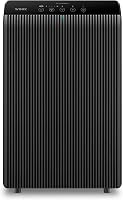
Air Purifier for Mold: What It Can and Cannot Do
An air purifier for mold can capture some airborne mold particles, but it cannot remove surface growth or fix moisture. Repair the water problem and clean up affected materials, then choose filtration sized for the room.
On this page (8 sections)
- What can an air purifier for mold actually do?
- Which filter and room size should you choose?
- Which of these products fits your situation?
- Why must moisture control come before filtration?
- How should you handle visible mold?
- How should you set up a purifier after cleanup?
- How do you keep filters working properly?
- Which air purifier for mold should you choose?
An air purifier for mold can capture some airborne mold particles, but it cannot remove growth on surfaces or stop a leak. Fix the moisture source and clean up affected materials before using filtration for extra support.
The EPA's guide to air cleaners in the home explains that portable air cleaners may remove some particles produced by mold. Filtration does not solve the moisture problem that allows growth.
For broader limits, read do air purifiers work. Our home air purifier guide helps you compare choices for other room needs.
What can an air purifier for mold actually do?
A purifier can capture airborne particles that reach its filter while the fan runs. This makes it useful for ongoing particle control after the source has been addressed.
It cannot pull mold out of drywall, carpet or wood. Particles that settle on furniture and floors also need cleaning rather than more fan time.
When does an air purifier help with mold?
An air purifier helps with mold particles after moisture repair and cleanup, when you want extra filtration in the affected room. It can collect particles that remain airborne or become airborne during normal activity.
Keep that role separate from cleanup. Buying a purifier does not make damp materials ready to keep, and cleaner-smelling air does not confirm that hidden growth is gone.
Which filter and room size should you choose?
Choose mechanical particle filtration and enough clean-air delivery for the room. A high-efficiency filter needs airflow to move room air through it.
HEPA is a useful feature for airborne mold particles, while a deodorization filter serves a different purpose. Odor reduction cannot confirm that mold has been removed; our HEPA vs True HEPA guide explains filter terms.
Use CADR, or clean air delivery rate, to compare particle-cleaning capacity. Smoke, dust and pollen CADR figures are useful comparisons, but none is a mold-specific score.
Measure the room before shopping, including connected space you expect the unit to serve. High ceilings increase the air volume, and a portable unit cannot reliably serve separate rooms through closed doors.
Check the time behind a coverage claim. Cleaning a large space once in an hour is different from repeatedly filtering a smaller room during that hour.
Use our guide to choosing an air purifier by CADR to match airflow to your space. Compare models on the same basis instead of choosing the largest square-foot number.
Which of these products fits your situation?
The Levoit suits buyers comparing verified airflow, the Coway suits buyers who want automatic fan control and care reminders, and the Govee tracks humidity. The Govee is a monitoring tool, not an air purifier.
Levoit Vital 200S-P: for buyers comparing airflow
The Levoit Vital 200S-P is AHAM VERIFIDE, with CADR figures of 250 CFM for smoke, 254 CFM for dust and 289 CFM for pollen. Those separate measurements give you a clear basis for comparing room-cleaning capacity.
Choose it when your first question is how much filtered air the unit can deliver. Its regular inlet and additional U-shaped inlet also suit a room where pet hair adds to the filter's workload.
Allow for a body measuring 14.96 x 8.66 x 19.69 inches, plus the clearance its manual requires. Skip it if your only available spot would squeeze its intake behind furniture, or if you need one unit to serve several closed rooms.
Coway AP-1512HH: for automatic daily operation
The Coway AP-1512HH combines a washable pre-filter, deodorization filter, bipolar device and HEPA filter. Its auto mode adjusts fan speed in response to an air-quality sensor.
Choose it if reminders will help you keep up with pre-filter cleaning and filter replacement. You can turn off its air-quality indicator light for sleep.
The body measures 9.6 x 16.8 x 18.3 inches. Coway describes coverage of up to 1,748 square feet in 60 minutes, so check the cleaning frequency you need before choosing it for a large room.
Skip it if you want a unit without a bipolar device. Its air-quality indicator is also not a mold detector, so don't use the light to judge whether cleanup is complete.
Govee H5075 Hygrometer: for tracking damp-room patterns
The Govee H5075 helps you see when humidity rises and whether moisture-control changes are working. Its stated humidity accuracy is ±3% RH, with readings refreshing as often as every 2 seconds.
Choose it for a basement, bedroom or other room where occasional checks miss changes during the day. The app provides 20-day graphs and supports exporting up to 2 years of records as a CSV file.
Skip it if you need Wi-Fi monitoring from outside the home. It uses Bluetooth, with a maximum range of 164 feet in open, unobstructed conditions; walls and distance can limit connection-dependent checks and alerts.
Why must moisture control come before filtration?
Moisture control comes first because damp materials can keep supporting mold growth while a purifier collects particles nearby. Find the water source instead of treating odor as the whole problem.
Check for plumbing leaks, roof leaks and condensation. Drying the room's air will not repair a leak or remove water trapped inside building materials.
A hygrometer measures room humidity, not moisture inside a wall. Place it away from direct splashes and supply vents, then look for patterns rather than reacting to every brief change.
Neither the Govee nor either purifier removes moisture from the room. Persistent humidity may call for dehumidification, while wet materials and leaks need direct attention.
How should you handle visible mold?
Visible mold needs cleanup and moisture repair, with precautions matched to the affected area and material. A household purifier does not replace protective equipment or containment.
The CDC mold cleanup guidance recommends protecting your mouth, nose, skin and eyes. People with allergies, immune suppression or underlying lung disease should not take part in cleanup.
Large areas, major water damage or growth inside an HVAC system may need professional help. Speak with a health professional about symptoms you think are linked to mold.
How should you set up a purifier after cleanup?
Set it in the cleaned room with open space around the intake and outlet, following the manual's clearance rules. Keep it away from wet areas and places where curtains can cover the inlet.
Before first use, remove any protective packaging from the filter and fit each part as directed. A fan can run while a wrapped or poorly seated filter prevents proper airflow.
Choose a fan speed you can comfortably keep running while the room is in use. Lower speeds move less air, so don't assume the quietest setting delivers the same room coverage as maximum speed.
Automatic operation can simplify daily use, but its sensor reading does not confirm the absence of mold. Continue watching for dampness, recurring odor and visible growth.
Place the unit to serve the room as a whole, rather than aiming its airflow at a moldy patch. Read where to place an air purifier for help with common layouts.
How do you keep filters working properly?
Follow the manual's cleaning and replacement schedule, and inspect the pre-filter as directed. Collected dust and hair can restrict airflow even when the fan still sounds normal.
The Coway's care alerts are based on how much air it has processed. Use reminders alongside the required checks rather than waiting for weak airflow or a new smell.
Wash only parts the manual identifies as washable, and let them dry fully before refitting. Do not wash a HEPA filter simply because the pre-filter can be rinsed.
Check replacement-filter availability before buying the purifier. Our guide to how often to change an air purifier filter explains how room conditions affect upkeep.
Which air purifier for mold should you choose?
Choose an air purifier for mold after deciding how you will control moisture and clean the affected area. If those steps remain unresolved, tackle them before spending on filtration.
Pick the Levoit Vital 200S-P when verified airflow figures are your main comparison tool. Choose the Coway AP-1512HH when automatic fan adjustment and filter-care reminders better fit your daily routine.
Add the Govee H5075 when you need humidity history within Bluetooth range. It answers a different question from a purifier: whether the room's moisture pattern is improving.
For a cleaned room where airborne allergens are the next concern, compare our best air purifiers for allergies.
Frequently asked questions
Can an air purifier kill mold?
No, an air purifier cannot remove mold growing on walls, ceilings, carpet or furniture; a particle filter captures some airborne material that passes through it, but the source stays in place. Fix the moisture problem and clean or remove affected materials instead of relying on filtration.
Should I run an air purifier while cleaning mold?
Do not rely on an air purifier as protection during mold cleanup; disturbing affected materials can release particles before they reach the filter. Follow cleanup guidance for protective equipment and containment, and keep people with asthma, allergies, immune suppression or underlying lung disease away from the work.
Is a HEPA filter best for mold particles?
A HEPA filter is a useful choice for capturing airborne mold particles that pass through the purifier; pair it with enough airflow for the room, since filter efficiency alone does not describe room cleaning. Neither a HEPA filter nor a high fan speed can remove mold growing on surfaces.
Where should an air purifier go after mold cleanup?
Place it in the cleaned room with clear space around its intake and outlet, following the manual's clearance instructions; avoid curtains, furniture and other airflow blocks. Choose a unit sized for that room, and do not expect it to clean separate rooms through closed doors.