Air Purifier vs Humidifier: Which Do You Need? (October 2026)
The air purifier vs humidifier choice depends on your room: choose filtration for airborne particles or added moisture for measured low humidity. Use both only when you have both needs.
On this page (11 sections)
- Air purifier vs humidifier: what changes in your room?
- Which appliance fits the problem you have?
- When should you buy or skip an air purifier?
- When should you buy or skip a humidifier?
- How do you compare room size and output?
- How should you set up either appliance?
- Can you run an air purifier and humidifier together?
- What care does each appliance need?
- Which one makes more sense in a bedroom?
- What mistakes should you avoid?
- Air purifier vs humidifier: your final decision
Choose an air purifier for airborne particles and a humidifier for measured low humidity. The air purifier vs humidifier decision comes down to what needs to change: the particles floating in your room or its moisture level.
Dust, pollen, pet dander and smoke particles call for filtration. Low humidity calls for added moisture, while a room with both problems may need both appliances.
Start by identifying the source of the problem and checking humidity. Buying the wrong appliance adds upkeep without addressing your main concern.


Air purifier vs humidifier: what changes in your room?
An air purifier captures particles from air passing through its filters, while a humidifier adds water to the air. Neither performs the other's main job.
A purifier draws room air through a filter system and returns it to the room. It works on particles that stay airborne long enough to reach the intake, so airflow and placement matter.
A humidifier releases moisture as mist or vapor. It raises relative humidity, which describes how much moisture the air holds compared with what it could hold at that temperature.
Neither appliance replaces ordinary home care. Vacuuming removes settled dust, ventilation helps exchange indoor air, and repairing leaks addresses moisture at its source.
The EPA guide to air cleaners explains how filtration supports source control and ventilation. A portable purifier is one part of that approach, rather than a way to remove every indoor pollutant.
Which appliance fits the problem you have?
Choose filtration for airborne particle concerns and added moisture only after confirming low humidity. Symptoms alone are a poor shopping guide because several indoor problems can feel similar.
Use these situations to narrow the choice:
- Pollen or pet dander: choose a room-sized air purifier and keep up with cleaning.
- Smoke particles: use filtration alongside steps to stop or reduce smoke entering the room.
- Low humidity during heating season: consider a humidifier after measuring the room.
- Dampness, musty smells or window condensation: skip added moisture and investigate the cause.
- Low humidity plus airborne particles: consider both, with separate placement and care routines.
A purifier cannot collect all the dust already sitting on shelves. A humidifier will not make a dusty room clean, even if the air feels more comfortable.
Our guide to how air purifiers work and what they cannot do explains where filtration helps and where another fix comes first.
Air purifier vs humidifier for allergies
An air purifier is the closer match for airborne allergens such as pollen and pet dander. Adding moisture does not remove those triggers.
Too much humidity can also favor mold and dust mites. A humidifier makes sense only when moisture is low, rather than as a general response to sneezing.
Keep expectations practical: filtration reduces some airborne exposure, while cleaning and controlling sources handle other parts of the problem. Our guide to air purifiers for allergies covers those limits.
For ongoing or severe symptoms, speak with a health professional instead of relying on an appliance change alone.
When should you buy or skip an air purifier?
Buy an air purifier when particle removal is the goal and you can run it regularly in the room that matters most. Skip it as a solution for low humidity, an active leak or settled dirt.
A bedroom can be a sensible priority because you spend long stretches there. A busy living room may matter more if pets or outdoor particles are your main concern.
Choose for that room rather than expecting one portable unit to clean every room through closed doors. Open layouts, tall ceilings and connected spaces also increase the amount of air a unit must handle.
Why the Levoit Vital 200S-P fits particle concerns
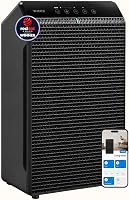
The Levoit Vital 200S-P suits households comparing measurable filtration performance, including homes with pets. Levoit identifies it as AHAM Verifide, with CADR figures of 250 CFM for smoke, 254 CFM for dust and 289 CFM for pollen.
CADR means clean air delivery rate. It helps you compare how much filtered air a purifier supplies for particular particle types.
Its standard intake and extra U-shaped intake are designed to draw in airborne pet hair. That makes it a relevant option for pet households, alongside vacuuming bedding, floors and other places where hair settles.
Do not choose it mainly for a strong odor problem. Particle filtration and gas removal are different tasks, and odor control depends on the filter materials and the source.
For alternatives matched to different rooms and needs, see our best air purifiers for home guide.
When should you buy or skip a humidifier?
Buy a humidifier when a humidity reading confirms the room is too dry and you can maintain the water system. Skip it when the room is already damp or regular cleaning is unlikely to happen.
Use a hygrometer to check the room over several days, especially while heating is running. Place it away from a mist outlet, direct sun and a heating vent so the reading better represents the room.
A general indoor humidity range is 30% to 50%. Stay below 50%, and reduce output if condensation appears, even when the sensor seems to show an acceptable level.
Why the Levoit LV600S fits moisture management
The Levoit LV600S Humidifier suits a dry room where you want humidity controls and overnight settings. It has a 6 L tank, warm and cool mist, and a top-fill design.
The VeSync app supports humidity monitoring, schedules and timers, while Auto Mode helps manage output. These controls are useful when moisture needs change between daytime heating and overnight use.
Levoit puts Sleep Mode below 28 dB and includes display lights off. That combination suits sleepers who want moisture without a glowing display beside the bed.
Choose between warm and cool mist for your preferred use, rather than assuming warm mist cleans room air. Neither setting turns this humidifier into an air purifier.
How do you compare room size and output?
Compare clean-air delivery for a purifier and moisture output for a humidifier. Their coverage areas describe different jobs and cannot tell you which appliance your room needs.
| Product | Best for | Main job | Room coverage | Routine care | Our score |
|---|---|---|---|---|---|
| Levoit Vital 200S-P | pet households | Filters airborne particles | Levoit claims up to 1,875 sq ft | Clear inlets and maintain filters | 9.2 |
| Levoit LV600S Humidifier | dry bedrooms | Adds moisture to the air | Levoit claims up to 753 sq ft | Fresh water and weekly cleaning | 7.3 |
Levoit claims coverage up to 1,875 sq ft for the Vital 200S-P and up to 753 sq ft for the LV600S. Treat those areas as starting points, then match the appliance to the room and intended use.
For filtration, check the room recommendation and the air-change rate behind it. A large maximum area may describe slower air turnover than you want for ongoing particle concerns.
Measure length and width to find floor area, and account for connected spaces. Our guide to CADR and air purifier sizing explains how to compare airflow with room needs.
For humidification, drafts, ventilation and heating affect how easily the room holds moisture. Judge success by a stable humidity reading, rather than the size of the visible mist plume.
The LV600S has maximum outputs of 300 ml/h for cool mist and 550 ml/h for warm mist. Higher output uses water faster, so tank capacity alone does not establish how long a fill will last.
The products' scores reflect their features and fit within this comparison. A higher purifier score does not make filtration the right choice for a dry room.
How should you set up either appliance?
Give a purifier clear airflow and a humidifier a stable spot where mist can disperse safely. Follow each manual's clearance instructions before deciding on a permanent location.
For a purifier, avoid tight gaps behind furniture or curtains that cover the intake. Keep the outlet clear so filtered air can circulate through the occupied part of the room.
Before its first run, check whether the filter has protective packaging that needs removal. Start with the manual's setup steps rather than assuming the assembled unit is ready.
For a humidifier, choose a level, water-resistant surface. Keep mist away from bedding, walls, books, electronics and anything else that could stay damp.
Allow room above the tank for filling and around the unit for cleaning. A convenient refill location matters because a hard-to-reach appliance is easier to neglect.
The Vital 200S-P measures 14.96 x 8.66 x 19.69 inches and weighs 13.2 lb. The LV600S measures 7.7 inches deep, 11.6 inches wide and 11.3 inches high, and weighs 6 lb before adding water.
Check the usable space around each footprint, not just whether the base fits. Our air purifier placement guide explains how furniture and room layout affect circulation.
Can you run an air purifier and humidifier together?
Yes, run both when you have separate particle and moisture needs. Keep the humidifier's mist away from the purifier so water does not wet its filter or housing.
There is no single distance that suits every room. Follow both manuals, aim mist into open space, and move the units if droplets reach the purifier or surrounding surfaces.
Check humidity away from the mist stream. A reading taken beside the outlet can be much higher than the rest of the room and can mislead your adjustments.
Do not use a purifier to compensate for poor humidifier care. Preventing dirty water, mineral buildup and damp surfaces is the better approach.
The EPA's home humidifier guidance explains why water choice, cleaning and moisture control belong together.
What care does each appliance need?
A purifier needs filter and intake care, while a humidifier needs fresh water, cleaning and drying. Plan for those tasks before buying either appliance.
Purifier care and filter replacement
Keep the purifier's intake free of visible hair and dust, following the manual's cleaning method. Do not wash a filter unless the instructions specifically identify it as washable.
Budget for replacement filters and check their availability before choosing a model. Heavy particle exposure can shorten useful filter life, so one calendar schedule will not suit every household.
Our guide to how often to change an air purifier filter explains how use and room conditions affect replacement.
Run the purifier at a speed you can tolerate for long periods. Choosing the lowest setting solely for quiet operation reduces airflow, so consider noise and cleaning needs together.
Humidifier water and cleaning
Levoit advises distilled or filtered water for the LV600S and weekly cleaning to limit buildup. Distilled water is a useful choice for reducing mineral residue because ordinary filters vary in what they remove.
Empty remaining water, dry accessible surfaces and refill with fresh water as directed. Topping off old water repeatedly lets residue remain in the tank.
Follow the manual for cleaning products, rinsing and removable parts. Keep cleaning solution out of the air path, and never mix cleaning chemicals.
The LV600S includes an aroma box for essential oils. Use that dedicated box according to the instructions, and leave fragrance out if it bothers anyone sharing the room.
Dry the humidifier before storage. Putting it away damp makes the next season's setup harder and can leave unwanted growth inside.
Which one makes more sense in a bedroom?
Choose a bedroom appliance for the condition present overnight, then consider sound, lights and care. Neither type is automatically the better sleep purchase.
If humidity is already in range, a humidifier adds work without meeting a moisture need. If airborne pollen or pet dander is the concern, choose filtration sized for the bedroom.
For a dry bedroom, set a humidity target and check the room in the morning. Window condensation, damp curtains or wet furniture mean you should lower output or change placement.
For filtration, compare performance at a fan speed you can sleep beside. Maximum-speed airflow is less useful if the sound leads you to switch the unit off.
Our bedroom air purifier guide helps you compare filtration options for a sleeping space.
What mistakes should you avoid?
Avoid adding moisture without measuring it or expecting filtration to solve a source problem. Those mistakes can leave the original issue in place.
- Buying from symptoms alone: check humidity and look for dust, smoke, leaks or other likely sources before choosing.
- Chasing maximum coverage: match output to the actual room and the appliance's job.
- Running mist at full output all night: use humidity readings and surface conditions to guide output.
- Ignoring routine care: a full tank or a running fan does not mean maintenance is complete.
- Expecting an appliance to fix dampness: repair leaks and address excess moisture first.
A musty room needs investigation before either purchase. Our guide to air purifiers and mold explains why collecting airborne particles cannot remove growth from damp materials.
Air purifier vs humidifier: your final decision
Choose the Vital 200S-P for particle filtration or the LV600S for confirmed low humidity. Choose both only when each solves a separate problem in the same room.
Before ordering, write down the room size, humidity reading and upkeep you can manage. Those details are more useful than choosing the appliance with the larger coverage claim or higher score.
For the air purifier vs humidifier choice, the next step is simple: measure moisture first, then match the appliance to the remaining need. If that points to filtration, use the air purifier buying guide to compare room size, airflow and filter care.
Frequently asked questions
Is an air purifier or humidifier better for allergies?
An air purifier is the better match for airborne allergy triggers such as pollen and pet dander; a humidifier adds moisture without removing those particles, and excess moisture can encourage mold and dust mites. Keep humidity under control and speak with a health professional about persistent or severe symptoms.
Can you use an air purifier and humidifier together?
Yes, you can use both when the room needs particle filtration and added moisture. Keep mist away from the purifier's intake and filter, give each appliance the clearance its manual requires, and monitor humidity away from the mist stream; reduce humidifier output if windows or nearby surfaces become damp.
Does a humidifier clean the air?
No, a humidifier adds moisture rather than filtering airborne particles; it cannot replace an air purifier for dust, pollen, pet dander or smoke. A dirty humidifier can also spread unwanted material into the room, so fresh water, routine cleaning and proper drying are part of using one.
Does an air purifier help with dry air?
No, an air purifier does not add water to the air or correct low humidity; its fan may make moving air more noticeable, but airflow is different from moisture removal. Measure the room's humidity before adding a humidifier, since a dry feeling alone does not establish the cause.
Which appliance needs more cleaning?
A humidifier generally needs more frequent attention because it stores water; Levoit advises cleaning the LV600S weekly, alongside routine water care. A purifier needs clear inlets and filter maintenance, with replacement timing based on its manual, use and the amount of material collected rather than one schedule for every home.