6 Best Air Purifiers for Pets (October 2026)
The best air purifiers for pet hair, dander and odors include the Levoit Vital 200S-P for busy pet homes, the Levoit Core 300-P for small pet bedrooms, and the Coway AP-1512HH for automatic daily use.
On this page (11 sections)
- The best air purifiers for pets and who should buy each
- Compare pet purifiers by cleaning pace, not maximum coverage
- How we matched these picks to pet homes
- Choose for dander, floating hair or pet smells
- Choose odor filters after cleaning the source
- Size the purifier for the room your pets actually use
- Set up a pet purifier for steady daily use
- Use Auto Mode and quiet settings with a plan
- Keep hair buildup from reducing airflow
- Avoid the mistakes that make pet filtration less useful
- Which is the best air purifier for your pets and room?
The Levoit Vital 200S-P is the best air purifier for pets for most homes because it pairs strong airflow with an extra inlet for airborne hair. Choose the Core 300-P for a small bedroom or the Winix 5510 when odor filtration and app control guide your decision.
Start with the room and the problem: floating dander, loose hair or smells. These need different features, and the largest coverage number is rarely the best way to choose.
An air purifier supplements vacuuming, grooming and litter box care. Our guide to how air purifiers help with pet odor explains where filtration helps and where source cleaning comes first.
Our picks at a glance
-
1

-
2

-
3

The best air purifiers for pets and who should buy each
The Vital 200S-P is the strongest all-around fit, while the remaining picks serve different room sizes and care routines. BonnyNest compared airflow, filters, controls and upkeep to match each model to a practical use.
Levoit Vital 200S-P: Best for busy pet homes
- 250 CFM smoke CADR
- U-shaped air inlet
- Pet Allergy replacement filter option
- AHAM Verifide
Strong airflow and an extra hair inlet suit a busy room shared with pets. A Pet Allergy replacement filter offers another option when fur and odors are priorities.
Pros
- Strong particle CADR figures
- Extra inlet for airborne pet hair
- Pet Allergy replacement filter option
Cons
- Needs more floor space than the Core 300-P
- Large coverage claim needs an air-change context
Choose the Vital 200S-P for a busy shared room where pets spend much of the day. Its smoke CADR is 250 CFM, with separate figures of 254 CFM for dust and 289 CFM for pollen.
The standard inlet works alongside a U-shaped inlet designed for airborne pet hair. Levoit says that extra path helps capture floating hair without clogging the intake.
The Pet Allergy replacement filter is an option for fur and unpleasant odors. Treat it as a separate filter choice, and check compatibility before ordering a replacement.
At 14.96 x 8.66 x 19.69 inches and 13.2 lb, this model needs a planned spot rather than a narrow gap beside furniture. Leave enough space to access the filter as well as the inlet.
Skip it if a compact bedroom footprint is your main need. For a wider family room, compare room requirements with our large-room air purifier guide.
Levoit Core 300-P: Best for small pet bedrooms
- 143 CFM smoke CADR
- 24 dB Sleep Mode
- Display-off control
- Manual fan speeds
A compact choice for a small bedroom where dark controls and quiet operation matter. Choose it if you prefer setting the fan yourself.
Pros
- Compact footprint
- Display lights can be turned off
- Timer and filter check indicator
Cons
- No automatic fan mode or app connectivity
- Less airflow than the Vital 200S-P
Choose the Core 300-P for a small bedroom when you want simple controls and a body that fits beside existing furniture. Its footprint is 8.7 x 8.7 inches, and it stands 14.2 inches tall.
Levoit rates it for 222 sq ft at 4.8 air changes per hour with the Original Filter. That is the useful pet-room figure, rather than the much larger area it can refresh once per hour.
Sleep Mode runs at 24 dB, and the display lights can be turned off. Those features suit nighttime use, but quiet operation still needs to provide enough circulation for your room.
This model has no app or Auto Mode, so choose the speed yourself. Its timer is useful for a planned session, though a room with pets often benefits from longer operation.
Skip it for a large connected living area or if you want automatic fan changes. Our bedroom air purifier picks offer more choices built around nighttime needs.
Coway AP-1512HH: Best for automatic daily use
- Washable pre-filter
- Deodorization filter
- Air quality monitor and Auto Mode
- Filter service alerts
Automatic fan adjustment suits a pet room with changing air conditions. A washable pre-filter and service alerts help you keep up with maintenance.
Pros
- Sensor-based automatic fan adjustment
- Washable pre-filter
- Three-year warranty
Cons
- Needs more floor space than the Core 300-P
- One-hour coverage figure requires careful sizing
Choose the Coway AP-1512HH for automatic daily operation when you prefer a sensor to handle fan changes. Its air quality light can be switched off, which helps if the unit also serves a sleeping space.
The four-stage system includes a washable pre-filter, deodorization filter, Bipolar Device and HEPA filter. The washable first stage is useful in a shedding household because larger debris needs frequent attention.
Service alerts cover pre-filter cleaning and filter replacement. They provide a routine reminder, but you should still inspect the intake when visible hair gathers around it.
Coway gives a coverage claim of 1,748 sq ft in 60 minutes. Use room-sizing guidance before choosing it for a large space that needs repeated circulation throughout the hour.
Its body measures 9.6 x 16.8 x 18.3 inches, and Coway provides a 3-year warranty. Skip it if the available floor space is a narrow bedside gap better suited to a compact unit.
Winix 5510: Best for odor-prone living rooms

- Odor control carbon filter
- Washable fine mesh pre-filter
- Smart sensors and Auto Mode
- Winix Smart app support
Carbon filtration, automatic fan control and app access suit a shared living room with pet smells. Check that its light-triggered Sleep Mode fits your routine.
Pros
- Carbon filter targets pet and household odors
- Washable fine mesh pre-filter
- Remote control and monitoring
Cons
- Tall body needs a suitable spot
- Darkness triggers Sleep Mode automatically
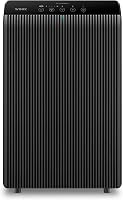
Choose the Winix 5510 for a living room with recurring pet smells when you also want remote control. Its odor control carbon filter targets household odors, while the washable fine mesh pre-filter catches larger airborne debris.
The True HEPA stage handles airborne particles, including pet dander. Sensors adjust fan speed in Auto Mode, and the Winix Smart app lets you control and monitor the purifier remotely.
Use its 392 sq ft AHAM Verifide room figure as the clearest starting point for comparison. Its larger one-hour coverage claim describes a different cleaning pace.
Sleep Mode activates when the room becomes dark and returns to Auto Mode when light comes back. That behavior suits some bedrooms, but consider it carefully for a dark living room used during the day.
At 25.2 inches tall, this is a prominent floor appliance. Skip it if you need something under a low shelf or if light-triggered fan changes do not fit your routine.
Levoit Vital Pet Pro: Best for litter box rooms

- 140 g of activated carbon
- TVOC and PM2.5 sensors
- Auto-clean pre-filter
- VeSync scheduling
A smaller pet room is the right setting for its odor-focused carbon filter and dual sensors. The auto-clean pre-filter helps manage captured hair between care sessions.
Pros
- Carbon filter aimed at pet odors
- Separate gas and fine-particle sensors
- App schedules and Display Lock
Cons
- Less airflow than the Vital 200S-P
- Auto-clean feature does not replace all maintenance
Choose the Vital Pet Pro for a smaller litter box or pet room where smells and captured hair both need attention. It contains 140 g of activated carbon, with TVOC and PM2.5 sensors for gas-related and fine-particle changes.
Its auto-clean pre-filter addresses hair already captured by the unit. It does not clean floors, empty a litter box or remove the need to follow the filter-care instructions.
The wide U-shaped inlet targets loose hair near the machine. Avoid choosing its position solely to catch fur, since blocking a walkway or crowding pet supplies can make the purifier harder to use.
A 148 CFM CADR supports Levoit's rating of 229 sq ft at 4.8 air changes per hour. The VeSync app adds schedules and remote control, while Display Lock helps prevent accidental setting changes.
Skip it for a large open room where airflow is the main need. Its pet-specific convenience features make more sense when the room already fits its circulation capacity.
Blueair Blue 311i Max: Best for shared home offices

- 250 CFM particle CADR
- QuietMark-certified operation
- App control and scheduling
- 360-degree air intake
Automatic airflow and app scheduling suit a medium room used for work and time with pets. Its round intake needs open space on all sides.
Pros
- Strong smoke, dust and pollen airflow
- QuietMark-certified operation
- App scheduling and filter tracking
Cons
- Wider footprint than the Core 300-P
- Higher fan speeds are louder than the lowest setting
Choose the Blueair Blue 311i Max for a medium home office or shared room where pets stay nearby. Its 250 CFM CADR for smoke, dust and pollen provides useful airflow beyond the smallest bedroom models.
Blueair's HEPASilent system combines mechanical and electrostatic filtration to capture airborne particles, including pet dander. Automatic fan control responds to changing air conditions, while app schedules help match operation to your workday.
Blueair identifies the model as QuietMark certified, with an operating range of 23–50 dB. Plan around the speed you can comfortably keep running during calls or focused work.
The body measures 12.5 x 12.5 x 19 inches and weighs 7.72 lb. Its 360-degree intake needs space around the unit, so a tight corner behind a desk is a poor fit.
Skip it if your main goal is a purifier with a pet-focused carbon feature. Its strongest reasons to buy are particle airflow, automatic operation and scheduling.
Compare pet purifiers by cleaning pace, not maximum coverage
Compare airflow and repeated room circulation first, then narrow the choices by odor filters, controls and floor space. The table highlights the differences that change which model fits your home.
| Product | Best for | Room sizing | Pet feature | Controls | Our score |
|---|---|---|---|---|---|
| Levoit Vital 200S-P | busy pet homes | Up to 1,875 sq ft; air-change rate unspecified | U-shaped inlet and Pet Allergy filter option | Smart model | 9.2 |
| Levoit Core 300-P | small pet bedrooms | 222 sq ft at 4.8 air changes per hour | Filtration for airborne animal dander | Manual speeds, timer and display-off control | 8.8 |
| Coway AP-1512HH | automatic daily use | Up to 1,748 sq ft in 60 minutes | HEPA and deodorization filters | Sensor-based Auto Mode | 8.7 |
| Winix 5510 | odor-prone living rooms | AHAM Verifide for 392 sq ft | Carbon filter and pet dander capture | Auto Mode, app and light-triggered Sleep Mode | 8.6 |
| Levoit Vital Pet Pro | litter box rooms | 229 sq ft at 4.8 air changes per hour | Hair inlet and auto-clean pre-filter | Dual sensors, app and Display Lock | 8.0 |
| Blueair Blue 311i Max | shared home offices | 439 sq ft in 12.5 minutes | Captures airborne pet dander | Automatic fan control and app schedules | 7.9 |
A claim covering a large area once per hour is different from a smaller room rating based on several air changes. Pets keep adding particles while they move around, so repeated circulation matters.
Air changes describe how much room air the purifier processes over time. They do not mean every particle disappears after one pass, since room air mixes and new particles keep entering it.
CADR measures particle-cleaning output, not pet odor removal. Our guide to air purifier CADR and room sizing explains how to compare airflow, while our home air purifier guide covers choices beyond pet-focused needs.
How we matched these picks to pet homes
We prioritized room airflow, dander filtration, hair management and odor filters because each solves a different part of living with pets. Noise, controls and filter access then determined which household each pick suits.
A washable first stage can make frequent hair cleanup easier. An automatic pre-filter feature offers a different kind of convenience, but neither removes the need for main-filter replacement.
For odor control, we looked for carbon or a named deodorization stage. A particle-capture percentage cannot tell you how much pet smell a purifier will remove.
We also separated quiet-mode figures from whole-room cleaning needs. The EPA's guide to home air cleaners explains room sizing, filter types and the limits of air cleaning.
Choose for dander, floating hair or pet smells
Choose particle filtration for dander, an accessible pre-filter for hair and carbon for odors. Many pet homes need all three, but knowing the main problem keeps you from paying for features you will rarely use.
Dander can stay airborne and move around a room, while larger strands of hair often settle on nearby surfaces. A purifier cannot pull fur off a sofa simply because it has a pet setting.
For heavy shedding, easy intake access matters more than a decorative location. You should be able to clear visible buildup without moving furniture or disconnecting several cords.
If allergies drive your choice, see our best air purifiers for allergies. Filtration can reduce airborne particles, but it does not promise symptom relief.
Which air purifier is best for pets with heavy shedding?
The Vital 200S-P is the first choice for a busy shedding household, provided the room fits its airflow. Its extra hair inlet addresses floating fur, while a separate cleaning routine handles the hair that settles.
Choose the Vital Pet Pro instead when the room is smaller and reducing pre-filter hair buildup is a priority. Neither model replaces vacuuming furniture, washing pet bedding or grooming suited to your animal.
Do not point a fan across a pile of fur to send it toward the purifier. Pick up settled hair directly rather than stirring debris back into the room.
Choose odor filters after cleaning the source
Choose carbon or deodorization filtration for lingering airborne smells, after cleaning litter, bedding or accidents. The Winix suits a shared room, while the Vital Pet Pro fits a smaller dedicated pet space.
Carbon works on some gases passing through the filter. Its useful life depends on the odor load, so a filter may need attention even when it does not look dirty.
A known carbon weight is useful information, but it does not establish a ranking against models without a stated amount. Room airflow, filter design and the strength of the odor source also affect results.
Keep the purifier away from litter that can spill into it or water bowls that can splash. Leave your pet an easy route to its supplies without squeezing past the appliance.
The EPA's overview of air cleaners and filters in the home explains why filtration works alongside source control and suitable ventilation.
Size the purifier for the room your pets actually use
Measure length times width to find the room's floor area, then compare models using a similar circulation rate. Do not size a purifier for the whole house if it will spend its time behind a closed bedroom door.
For example, a 12 x 15 ft room is 180 sq ft. That is a different need from a living room connected to a hallway and dining area, even if only one pet uses both spaces.
High ceilings add air volume without adding floor area. If the room is taller than a standard room, use a sizing method that accounts for height rather than relying on square footage alone.
For exact measuring steps, use our guide to calculating square footage for an air purifier. Consider each regularly connected space before settling on a smaller model.
A single purifier also cannot serve several closed rooms evenly. Put the first unit where pets and people spend the most time together, then assess whether another room needs separate coverage.
Set up a pet purifier for steady daily use
Start with clear airflow, correct filter installation and a usable fan speed. Good placement makes the purifier easier to keep running and maintain.
Read the setup instructions before switching it on, including whether protective filter packaging needs removal. Check that the filter and access panel are seated correctly.
Choose a stable spot with the required clearance around its intake and outlet. Our guide to where to place an air purifier covers bedrooms, shared rooms and common spacing problems.
Secure the cord away from chewing access and busy walking paths. Keep soft bedding, curtains and toys from drifting over the intake.
Run the purifier while the room is in use, rather than only after a smell becomes noticeable. Pets add particles throughout the day, so a short burst before bedtime may miss much of that activity.
If your pet seems wary of the sound, begin with a lower setting while supervised and allow space to move away. Avoid aiming the outlet directly at a bed or crate where your pet cannot choose another spot.
Use Auto Mode and quiet settings with a plan
Use a steady manual speed or Auto Mode that fits the room, and judge quiet settings by whether you can keep the purifier running. A silent unit switched off most of the day provides little help.
Automatic sensors respond to what they measure near the machine. They do not measure fur on furniture, and a reassuring light does not mean every odor or allergen has disappeared.
Try the fan levels during ordinary activities such as calls, television and sleep. A model with higher airflow may let you choose a comfortable operating level, but maximum-speed capacity is not guaranteed at its lowest setting.
App schedules help when your routine is predictable, while manual controls suit people who want fewer settings to manage. Our guide to what air purifiers can and cannot do helps set useful expectations for either approach.
Keep hair buildup from reducing airflow
Inspect the intake and pre-filter regularly, especially during seasonal shedding. Begin with weekly checks, then adjust the interval to how quickly hair collects in your home.
Unplug the purifier before care and clean only the parts approved in its manual. A washable pre-filter does not mean the HEPA or carbon stage can go into water.
Let washed parts dry fully before reinstalling them as directed. Avoid adding scent sprays, essential oils or cleaning chemicals to filters.
Follow each model's replacement guidance rather than applying one schedule to every purifier. Levoit recommends replacing the Core 300-P filter every 6–8 months, with your room conditions still affecting care needs.
Our air purifier filter replacement guide explains reminders and signs that deserve an earlier check. Keep a simple note of filter changes so care does not depend on remembering when the unit arrived.
Avoid the mistakes that make pet filtration less useful
Avoid undersizing, blocked airflow and neglected source cleaning. These mistakes can undermine a suitable purifier without any fault in its filters.
Buying by the largest room claim can leave you with slow circulation. Compare the time attached to the coverage figure before deciding that a compact unit can serve an open floor plan.
Hiding a purifier behind a sofa makes the room look tidier but restricts access and airflow. Choose a spot you can leave clear every day.
Running only the quietest mode can also limit cleaning output. Use a speed that balances room circulation with noise you can tolerate for long periods.
Do not expect a higher particle-capture percentage to solve litter smells or replace vacuuming. Match the filter to the pollutant, then remove the source you can reach.
Which is the best air purifier for your pets and room?
Choose the best air purifier for pets by room fit first, then decide which care and control features you will use. That approach is more useful than buying the model with the most pet-related settings.
Pick the Vital 200S-P for a busy shared room, or the Core 300-P for a compact bedroom where manual controls suit you. Choose the Coway if automatic daily fan adjustment is your main priority.
The Winix is the choice for odor-focused living room use with app access. Pick the Vital Pet Pro for a smaller litter box room, or the Blueair for a medium shared workspace centered on particle filtration and scheduling.
Before ordering, measure the intended room and choose a clear permanent spot. If odor remains the deciding issue, read our guide to using an air purifier for pet odor to plan the filter and cleaning routine together.
Our top 3 picks at a glance
-
1
-
2
-
3
Frequently asked questions
Do air purifiers remove pet hair?
Air purifiers catch some floating pet hair that reaches their intake, but they cannot collect fur already resting on floors, rugs or furniture. Keep vacuuming and grooming as part of your routine, and choose a pre-filter you can maintain easily if your pets shed heavily.
Do air purifiers get rid of pet odors?
A purifier with activated carbon or a deodorization filter can reduce some odor-causing gases passing through it. Clean litter boxes, bedding and accidents first, because filtration cannot remove the source; persistent smells may also mean the odor filter needs replacement even when the particle filter still looks usable.
Where should I put an air purifier for pets?
Put it in the room where your pet spends the most time, with clear space around the intake and outlet as directed in the manual. Keep it on a stable surface away from water bowls, loose curtains and chewing access, with enough room to open the filter compartment.
What size air purifier do I need for a pet room?
Match the purifier to the room's measured floor area and favor sizing based on several air changes per hour. A large one-hour coverage claim describes slower circulation, so check CADR and account for connected spaces or high ceilings before choosing a model for steady pet dander filtration.
How often should I change a pet air purifier filter?
Follow the model's replacement guidance and inspect the pre-filter regularly, especially during heavy shedding. Clean only parts approved for cleaning, and replace the main filter as directed by the manual or reminder system, checking sooner if airflow drops or odors return after you have cleaned their source.