Coway vs Winix Air Purifiers: Which Is Better? (October 2026)
In this Coway vs Winix comparison, choose Coway for a shorter cabinet and filter-care reminders, or Winix for app control and automatic Sleep Mode. Choose between the two Winix models mainly by cabinet size, since their stated room coverage and core features match.
On this page (11 sections)
- Coway vs Winix at a glance
- How much room can these purifiers handle?
- Which filtration differences should affect your choice?
- Which is better for pet, cooking and smoke odors?
- Which controls will you use every day?
- Coway or Winix for a bedroom?
- Which cabinet fits your room?
- Which Coway or Winix model should you choose?
- How should you set up and care for either brand?
- Common mistakes in a Coway vs Winix purchase
- The final Coway vs Winix decision
Choose Coway for a shorter purifier and filter-care reminders, or Winix for app control and automatic Sleep Mode. The most useful Coway vs Winix comparison starts with your room and daily routine, rather than the largest coverage number.
The Coway AP-1512HH leads this comparison overall, but the narrower Winix 5520 can be the better fit beside furniture. The Winix 5510 suits buyers who want connected controls and have room for its larger cabinet.
All three adjust fan speed automatically and include particle and odor filtration. Your main choices are cabinet shape, room sizing, nighttime behavior and how you want to manage the purifier.
Coway vs Winix at a glance
Coway suits buyers who want a shorter cabinet and maintenance prompts; Winix suits buyers who want connected controls. Neither Winix model has a stated coverage advantage over the other.
| Your priority | Start with | Main trade-off |
|---|---|---|
| Limited vertical clearance | Coway AP-1512HH | Wider than either Winix |
| Remote control and monitoring | Winix 5510 | Largest cabinet here |
| Less floor space beside furniture | Winix 5520 | Taller than Coway |
| Darkness-triggered Sleep Mode | Either Winix | Low-speed operation may not suit every cleaning need |
| Separate filter-care reminders | Coway AP-1512HH | Choose another model if app access is essential |
Before choosing, identify the room where the purifier will spend most of its time. Moving one unit between several rooms leaves each room without filtration for part of the day.
How much room can these purifiers handle?
Use room size and cleaning frequency together, rather than buying from the maximum hourly area alone. Coway claims up to 1,748 sq ft in 60 minutes, while Winix claims about 1,882 sq ft for either model.
Both Winix models also have a stated AHAM Verifide room size of 392 sq ft. That is the more useful starting point for sizing those models than assuming their maximum hourly area represents frequent cleaning.
Winix gives additional coverage claims of 941 sq ft in 30 minutes, 627 sq ft in 20 minutes and 470 sq ft in 15 minutes. These show why a smaller room can receive more frequent air cleaning.
The 5510's headline uses 1,881 sq ft while its coverage breakdown uses 1,882 sq ft. A difference of 1 sq ft should have no role in your decision.
Measure the room's length and width, then account for connected space if doors usually stay open. Our guide to calculating room size for an air purifier explains the basic measurements.
High ceilings add air volume, and walls or doorways limit circulation between rooms. A purifier in a hallway should not be treated as a substitute for one in a closed bedroom.
Read our guide to choosing an air purifier by room size and CADR if you need help comparing airflow. The AHAM Verifide air cleaner directory also provides verified room-size information.
Which filtration differences should affect your choice?
Both brands cover the main jobs: catching airborne particles and reducing some odors. Their particle-capture claims use different sizes, so the percentages do not provide a fair ranking of whole-room cleaning.
Coway combines a washable pre-filter, deodorization filter, bipolar device and HEPA filter. Coway says its system reduces 99.97% of particles measuring 0.3 microns, including pollen and other allergens.
The Winix models combine a washable fine-mesh pre-filter, high-deodorization carbon filter, True HEPA filter and PlasmaWave technology. Winix says its HEPA filter captures 99.99% of airborne allergens as small as 0.01 microns.
A capture percentage describes filtration under particular conditions. It does not tell you how much room air passes through the purifier at the fan speed you will tolerate.
Our HEPA vs True HEPA guide explains why filter wording should not decide the purchase by itself. Give room sizing and regular use more weight than a smaller particle number.
Coway vs Winix for dust and allergies
Choose enough airflow for the room before favoring either brand for allergies. Both target airborne pollen and pet dander, but neither can promise symptom relief.
Larger dust and hair can collect on pre-filters, while fine particles require the later filtration stages. A pre-filter covered in debris needs attention even when the purifier still runs.
Keep vacuuming and wiping surfaces because settled dust must become airborne before a purifier can catch it. Our guide to air purifiers for dust explains this limit.
Which is better for pet, cooking and smoke odors?
There is no clear odor-removal winner here. Both brands include odor filtration, but the available facts do not establish a comparable carbon capacity or odor-removal rate.
Winix describes its carbon filter as reducing VOCs and odors from cooking, pets and smoke. Coway also claims odor and VOC reduction.
For a pet room, start with litter, bedding and other odor sources. Filtration works alongside cleaning, rather than making a dirty litter box or damp pet bed harmless.
For cooking odors, use a suitable exhaust fan and keep the purifier away from grease splashes and heat. Do not place it where a curtain or cabinet blocks its airflow.
Smoke needs source control as well as filtration, and a purifier does not make smoke exposure safe. Read what an air purifier can do for smoke before choosing one for that purpose.
The EPA guide to air cleaners in the home explains how filtration fits alongside ventilation and pollutant removal.
Which controls will you use every day?
Pick Winix if remote access is a requirement; pick Coway if filter-care reminders matter more. All three offer sensor-based Auto mode, so app access is an extra convenience rather than a requirement for automatic fan adjustment.
The Winix Smart App lets you control and monitor either Winix remotely. That is useful when the purifier sits across the room or you want to check it without walking over.
Coway includes Eco mode and separate care alerts based on how much air the filters have processed. Check the operating instructions to understand how Eco mode changes operation before making it your main reason to buy.
Treat each colored air quality indicator as feedback from that unit's sensor. A reassuring color is not proof that every pollutant is absent or that filter care can wait.
Auto mode is a useful everyday starting point. When you need sustained cleaning, learn the manual fan controls so you can choose airflow directly instead of relying only on the sensor.
Coway or Winix for a bedroom?
Coway suits sleepers who want a shorter cabinet and control over the air quality light; Winix suits those who prefer automatic nighttime changes. Neither choice should be sized around its quietest setting alone.
You can turn off Coway's air quality indicator for sleep. That is helpful when the purifier faces the bed and a colored light would be distracting.
Both Winix models automatically enter Sleep Mode when the room darkens and return to Auto Mode when light returns. Consider that behavior if you darken a room during the day but still want stronger airflow.
Winix gives both models a 23.5 dB figure at the slowest speed. That describes one operating setting, rather than the noise you should expect at every speed.
A quiet setting moves less air than a higher setting on the same purifier. Our quiet air purifier guide explains how to balance nighttime comfort with room-cleaning needs.
Which cabinet fits your room?
Coway is shortest, Winix 5520 has the smallest footprint, and Winix 5510 needs the most cabinet space. Measure the location with airflow clearance included, rather than fitting the unit tightly between objects.
| Product | Best for | Claimed 60-minute coverage | Dimensions | Weight | Our score |
|---|---|---|---|---|---|
| Coway AP-1512HH | low-clearance rooms | Up to 1,748 sq ft | 9.6 x 16.8 x 18.3 in | 12.5 lb | 8.7 |
| Winix 5510 | remote monitoring | Up to 1,882 sq ft | 11 x 15.9 x 25.2 in | 13.3 lb | 8.6 |
| Winix 5520 | tight floor spaces | Up to 1,882 sq ft | 8.3 x 13.6 x 22.7 in | 13.3 lb | 8.2 |
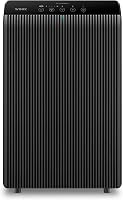
Coway measures 9.6 x 16.8 x 18.3 inches and weighs 12.5 pounds. The Winix 5510 measures 11 x 15.9 x 25.2 inches, while the 5520 measures 8.3 x 13.6 x 22.7 inches.
Both Winix models weigh 13.3 pounds. The smaller 5520 therefore saves space without reducing carrying weight compared with the 5510.
A shorter cabinet does not make an enclosed shelf a suitable location. Leave the intake, outlet and filter-access area clear according to the instructions.
Check the path of curtains, recliners and doors before settling on a spot. Our guide to where to place an air purifier covers positions that support circulation.
Which Coway or Winix model should you choose?
Buy the model that fits your room and operating habits, even if another has a slightly higher score. The practical differences below matter more than a small score gap.
Coway AP-1512HH: Best for low-clearance rooms

- Coway claims coverage up to 1,748 sq ft in 60 minutes
- Washable pre-filter, deodorization filter, bipolar device and HEPA filter
- Air quality sensor with Auto and Eco modes
- Filter replacement and pre-filter cleaning alerts
Choose this shorter purifier when vertical clearance and filter-care reminders matter more than remote controls.
Pros
- Shortest and lightest of the three
- Includes Eco mode
- Air quality light can be turned off for sleep
- Coway backs it with a 3-year warranty
Cons
- Wider than both Winix models
- Lower claimed 60-minute coverage than the Winix models
Coway AP-1512HH: for shorter spaces and care reminders
The Coway is the strongest fit for buyers who value a shorter cabinet, clear maintenance prompts and automatic operation. Its lower weight also helps if you occasionally move it to clean the floor beneath it.
The separate pre-filter and replacement alerts give routine care a clear place in your schedule. Coway also backs this model with a 3-year warranty.
Skip it if you require the remote control and monitoring offered by the Winix models. Also measure width carefully, since its shorter shape takes more side-to-side space.
Our full Coway AP-1512HH review gives more context for this model's features.
Winix 5510: Best for remote monitoring

- Winix states AHAM Verifide coverage of 392 sq ft
- Winix claims coverage up to 1,882 sq ft in 60 minutes
- True HEPA and high-deodorization carbon filters
- Smart sensors, Auto Mode and app support
A connected choice for a room with enough floor space, offering remote monitoring and automatic Sleep Mode.
Pros
- Winix states AHAM Verifide coverage of 392 sq ft
- App control and real-time air quality monitoring
- Winix gives a 23.5 dB figure on its slowest speed
- Washable fine-mesh pre-filter
Cons
- Tallest and deepest unit of the three
- Same stated room coverage as the smaller Winix 5520
Winix 5510: for connected controls in an open spot
The Winix 5510 suits buyers who want app access and have a clear place for a taller purifier. Its automatic daytime and nighttime operation may appeal if you prefer fewer manual adjustments.
Choose it because those controls suit your routine, rather than assuming a larger cabinet means greater cleaning capacity. Its stated room coverage and core features match the 5520.
Skip it if floor space is tight or you have limited vertical clearance. Read our full Winix 5510 review for a closer look at its room-fit trade-offs.
Winix 5520: Best for tight floor spaces
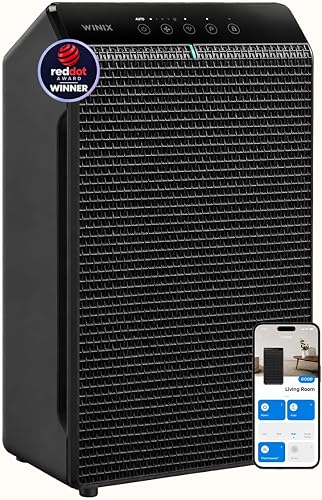
- Winix states AHAM Verifide coverage of 392 sq ft
- Winix claims coverage up to 1,882 sq ft in 60 minutes
- True HEPA and high-deodorization carbon filters
- Winix Smart App compatibility
Choose this narrower Winix when you want connected controls but have less floor space beside furniture.
Pros
- Smallest cabinet footprint of the three
- Remote control and monitoring through the Winix Smart App
- Same stated room coverage as the Winix 5510
- Light-activated Sleep Mode
Cons
- Taller than the Coway
- Weighs the same as the larger Winix 5510
Winix 5520: for connected controls with less floor space
The Winix 5520 is the practical Winix choice when cabinet size is the deciding factor. It keeps the app support and core filtration features of the 5510 in a narrower, shallower body.
That makes it worth choosing over the higher-scoring 5510 when you have a suitable gap beside furniture. Leave the required clearance instead of treating its smaller dimensions as permission to squeeze it in.
Skip it if you need Coway's lower height or expect the smaller cabinet to be lighter. It shares the 5510's weight.
How should you set up and care for either brand?
Check the filters before first use, keep airflow clear and build a regular pre-filter routine. These steps matter whichever brand you choose.
Before plugging in the purifier, open the filter compartment and remove any protective packaging as directed. Confirm that each filter faces the correct way and that the cover closes properly.
Place the purifier on a stable surface away from water and heat. Start with a fan setting you can live with for long periods, then adjust for changing room conditions.
For a Winix model, set up app access after confirming the basic controls work. Check its behavior when the room darkens so Sleep Mode does not surprise you later.
All three have washable pre-filters, but that does not make the other filters washable. Follow the exact care instructions and let washed parts dry fully before reinstalling them.
Check pre-filters more often in rooms with shedding pets or visible dust buildup. Use Coway's reminders as maintenance prompts, while still paying attention to visible debris.
Before buying, confirm the correct replacement filter set and that you can obtain it regularly. Our guide to how often to change an air purifier filter explains why replacement needs vary with use.
Common mistakes in a Coway vs Winix purchase
The biggest mistakes are oversizing expectations and underestimating daily use. Avoid these shortcuts when comparing the three models.
- Buying for the whole home from an hourly coverage claim. Closed doors and separate rooms limit how freely air can reach one purifier.
- Comparing capture percentages as cleaning speed. Filter efficiency and the volume of air processed answer different questions.
- Choosing only by the lowest noise figure. Make sure the fan setting you will use can support your room's needs.
- Hiding the cabinet behind furniture. A tidy-looking location can block the airflow you bought the purifier to provide.
- Washing every filter. Only wash parts that the model's care instructions identify as washable.
- Expecting odor filtration to replace cleaning. Remove the source and use appropriate ventilation alongside the purifier.
The final Coway vs Winix decision
Choose by room fit first, controls second and upkeep third. That gives you a useful Coway vs Winix decision without relying on nearly identical headline claims.
Pick Coway when its lower height and care reminders solve your main needs. Pick the 5510 when you want connected operation and its cabinet fits comfortably, or the 5520 when you want those Winix features with less floor space.
If the only suitable position blocks airflow, or your space needs more capacity, widen the search. Our best air purifiers for home guide helps you compare other room sizes and uses.
Frequently asked questions
Is Coway or Winix better?
Coway is the better fit for limited vertical clearance and filter-care reminders, while Winix suits buyers who want remote controls and automatic Sleep Mode. Start with room size and placement, then choose the controls you will use; neither brand's particle-capture percentage establishes a room-cleaning winner.
Which is better for a bedroom, Coway or Winix?
Choose Coway for a shorter cabinet and an air quality light you can switch off, or Winix for light-activated Sleep Mode. Winix gives both models a 23.5 dB figure on their slowest speed; that figure does not describe louder settings, so allow for the airflow your bedroom needs.
Which is better for pets and odors?
Both brands include odor filtration, so choose by room fit and controls rather than expecting a clear odor-removal winner. Winix describes carbon filtration for pet, cooking and smoke odors, while Coway also claims odor and VOC reduction; cleaning bedding, removing waste and controlling the source remain essential.
Do Coway and Winix air purifiers have washable filters?
All three models have a washable pre-filter, but that does not make their HEPA or odor filters washable. Follow the care instructions for the exact model and let the pre-filter dry fully before reinstalling it; Coway also provides separate reminders for pre-filter cleaning and filter replacement.
Which Coway or Winix model covers the largest room?
Winix advertises the largest hourly area, about 1,882 sq ft for either model, compared with Coway's 1,748 sq ft; both Winix models also have a stated AHAM Verifide room size of 392 sq ft. Use that distinction when sizing, since one-hour coverage and verified room size are different measures.